


Page 47 - TD-3-1
P. 47
Tumor Discovery                                                        Energy metabolism in bladder cancer


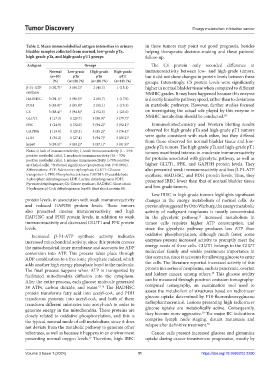
            Table 2. Mean immunolabelled antigen intensities in urinary   in these tumors may point out good prognosis, besides
            bladder samples collected from normal, low‑grade pTa,   helping therapeutic decision-making and these patients’
            high‑grade pTa, and high‑grade pT1 groups          follow-up.

             Antigens                Groups                      The CS protein only recorded difference in
                      Normal  Low‑grade   High‑grade   High‑grade   immunoreactivity between low-  and high-grade tumors,
                      (n=10)    pTa       pTa       pT1        but it did not show changes in protein levels between these
                       (%)    (n=10) (%)  (n=10) (%)  (n=10) (%)  groups. Interestingly, CS protein levels were significantly
            β-F1-ATP   3 (92.7)*  3 (86.2)*  2 (41.3)  1 (15.1)  higher in normal bladder tissue when compared to different
            synthase                                           NMIBC grades. It may have happened because this enzyme
            HADHSC    3 (91.1)*  3 (90.5)*  2 (61.7)  1 (17.9)  is directly linked to pathway speed, rather than to deviations
            PDH       3 (83.0)*  3 (85.9)*  2 (51.1)  1 (19.3)  in metabolic pathways. However,  further studies  focused
            CS        3 (88.4)*  3 (94.8)*  2 (52.5)  1 (23.0)  on investigating the actual role played by this enzyme in
            GLUT1     1 (17.3)  1 (29.7)  3 (89.9)*  3 (79.7)*  NMIBC metabolism should be conducted. 28
            PFK       1 (24.9)  1 (32.0)  3 (94.2)*  3 (92.1)*   Immunohistochemistry and Western blotting results
            GAPDH     1 (19.8)  1 (29.3)  3 (85.2)*  3 (76.4)*  observed for high-grade pTa and high-grade pT1 tumors
                                                               were quite consistent with each other, but they differed
            LDH       1 (30.2)  1 (27.4)  3 (94.7)*  3 (88.2)*
                                                               from those observed for normal bladder tissue and low-
            hsp60     3 (93.5)*  3 (89.2)*  3 (87.1)*  3 (81.9)*
                                                               grade pTa tumors. The high-grade pTa and high-grade pT1
            Notes: 0, lack of immunoreactivity; 1, weak immunoreactivity (1 – 35%   tumors manifested intense-to-moderate immunoreactivity
            positive urothelial cells); 2, moderate immunoreactivity (36 – 70%
            positive urothelial cells); 3, intense immunoreactivity (>70% positive   for proteins associated with glycolytic pathway, as well as
            urothelial cells). *Statistical significance (proportion test, P<0.0001).  higher GLUT1, PFK, and GAPDH protein levels. They
            Abbreviations: ATP: Adenosine triphosphate; GLUT1: Glucose   also presented weak immunoreactivity and low β-F1-ATP
            transporter-1; PFK: Phosphofructokinase; GAPDH: Glyceraldehyde   synthase, HADHSC, and PDH protein levels. Thus, they
            3-phosphate dehydrogenase; LDH: Lactate dehydrogenase; PDH:   presented IBEC lower than that of normal bladder tissue
            Pyruvate dehydrogenase; CS: Citrate synthase; HADHSC: Short chain
            3-hydroxyacyl-CoA dehydrogenase; hsp60: Heat shock protein 60.  and low-grade tumors.
                                                                 Low IBEC in high-grade tumors highlights significant
            protein levels, in association with weak immunoreactivity   changes in the energy metabolism of normal cells. As
            and reduced  GAPDH  protein  levels.  These  tumors   previously suggested by Otto Warburg, the energy metabolic
            also presented intense immunoreactivity and high   activity of malignant neoplasms is mostly concentrated
            HADHSC and PDH protein levels, in addition to weak   in  the  glycolytic  pathway.   Increased  metabolism  in
                                                                                      13
            immunoreactivity and decreased GLUT1 and PFK protein   tumor cells requires higher ATP consumption, and
            levels.                                            since the glycolytic pathway produces  less ATP than
              Increased  β-F1-ATP synthase activity indicates   oxidative phosphorylation, although much faster, some
            increased mitochondrial activity, since this protein crosses   enzymes present increased activity to promptly meet the
            the mitochondrial inner membrane and accounts for ADP   energy needs of these cells. GLUT1 belongs to the GLUT
            conversion into ATP. This process takes place through   molecules’ family and wields paramount importance in
            ADP combination to a free ionic phosphate radical, which   this scenario, since it accounts for allowing glucose to enter
            adds another high energy phosphate bond to the molecule.   the cells. The literature reported increased activity of this
            The final process happens when ATP is transported by   protein in a series of neoplasms, such as pancreatic, ovarian
                                                                                           29
            facilitated mitochondria diffusion into the cytoplasm.   and kidney cancer, among others.  This glucose avidity
            After the entire process, each glucose molecule generated   can be measured through positron emission tomography-
            38 ATPs, carbon dioxide, and water. 13-16  The HADHSC   computed tomography, an examination tool used to
            protein transforms fatty acid into acetyl-coA, and PDH   assess the metabolism of structures based on radiotracer
            transforms  pyruvate  into  acetyl-coA,  and  both  of  them   glucose uptake  determined by  F18-fluorordesoxyglucose
            transform different substrates into acetyl-coA in order to   radiopharmaceutical. Lesions presenting high radiotracer
            generate energy in the mitochondria. These proteins are   glucose  uptake  are  metabolically  active.  Consequently,
                                                                                       30
            closely  related  to  oxidative  phosphorylation,  and  this  is   they become more aggressive.  The major BC indications
            the typical, normal mode of cell metabolism, since it does   comprise lymph node staging, distant metastasis and
                                                                                         30
            not deviate from the metabolic pathway to generate other   relapse after definitive treatment.
            substrates, as well as because it happens in an environment   Cancer cells present increased glucose and glutamine
            presenting normal oxygen levels.  Therefore, high IBEC   uptake during cancer invasiveness progression, mostly by
                                       13

            Volume 3 Issue 1 (2024)                         11                         https://doi.org/10.36922/td.2290

