


Page 80 - TD-3-3
P. 80
Tumor Discovery                                        PTMAP5–hsa-miR-22-3p–KIF2C axis in HCC development


            A                                                   B


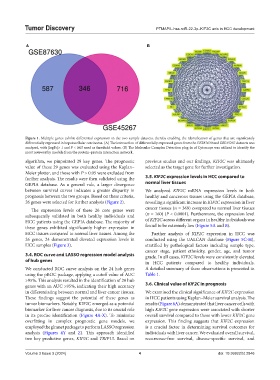
            Figure 1. Multiple genes exhibit differential expression in the two sample datasets, thereby enabling the identification of genes that are significantly
            differentially expressed in hepatocellular carcinoma. (A) The intersection of differentially expressed genes from the GSE87630 and GSE45267 datasets was
            analyzed, with |logFc|> 1 and P < 0.05 used as threshold values. (B) The Molecular Complex Detection plug-in of Cytoscape was utilized to identify the
            most noteworthy module from the protein–protein interaction network.
            algorithm, we pinpointed 29 key genes. The prognostic   previous studies and our findings, KIF2C was ultimately
            value of these 29 genes was evaluated using the Kaplan–  selected as the target gene for further investigation.
            Meier plotter, and those with P > 0.05 were excluded from
            further analysis. The results were then validated using the   3.5. KIF2C expression levels in HCC compared to
            GEPIA database. As a general rule, a larger divergence   normal liver tissues
            between survival curves indicates a greater disparity in   We analyzed  KIF2C mRNA expression levels in  both
            prognosis between the two groups. Based on these criteria,   healthy and cancerous tissues using the GEPIA database,
            26 genes were selected for further analysis (Figure 2).  revealing a significant increase in KIF2C expression in liver
              The expression levels of these 26 core genes were   cancer tissues (n = 369) compared to normal liver tissues
            subsequently validated in both healthy individuals and   (n = 160) (P < 0.0001). Furthermore, the expression level
            HCC patients using the GEPIA database. The majority of   of KIF2C across different organs in healthy individuals was
            these genes exhibited significantly higher expression in   found to be extremely low (Figure 5A and B).
            HCC tissues compared to normal liver tissues. Among the   Further analysis of  KIF2C expression in HCC was
            26  genes,  24  demonstrated  elevated  expression  levels  in   conducted using the UALCAN database (Figure  5C-H),
            HCC samples (Figure 3).                            stratified by pathological factors including sample type,
                                                               cancer stage, patient ethnicity, gender, age, and tumor
            3.4. ROC curve and LASSO regression model analysis   grade. In all cases, KIF2C levels were consistently elevated
            of hub genes                                       in HCC patients compared to healthy individuals.
            We conducted ROC curve analysis on the 24 hub genes   A detailed summary of these observations is presented in
            using the pROC package, applying a cutoff value of AUC   Table 1.
            >95%. This analysis resulted in the identification of 20 hub
            genes with an AUC >95%, indicating their high accuracy   3.6. Clinical value of KIF2C in prognosis
            in differentiating between normal and liver cancer tissues.   We examined the clinical significance of KIF2C expression
            These findings suggest the potential of these genes as   in HCC patients using Kaplan–Meier survival analysis. The
            tumor biomarkers. Notably, KIF2C emerged as a potential   results (Figure 6A) demonstrated that liver cancer cells with
            biomarker for liver cancer diagnosis, due to its crucial role   high KIF2C gene expression were associated with shorter
            in  its  precise  identification  (Figure  4A-X).  To  minimize   overall survival compared to those with lower KIF2C gene
            overfitting in complex prognostic gene models, we   expression. This finding suggests that  KIF2C expression
            employed the glmnet package to perform LASSO regression   is a crucial factor in determining survival outcomes for
            analysis (Figures  4Y and  Z). This approach identified   individuals with liver cancer. We evaluated overall survival,
            two key predictive genes,  KIF2C and  TRIP13. Based on   recurrence-free survival, disease-specific survival, and


            Volume 3 Issue 3 (2024)                         4                                 doi: 10.36922/td.2846

