


Page 81 - TD-3-3
P. 81
Tumor Discovery                                        PTMAP5–hsa-miR-22-3p–KIF2C axis in HCC development


            A               B               C                D               E                F


            G               H               I                J               K                 L


            M                 N             O                P              Q                  R


            S                T               U               V               W                 X


            Y                Z


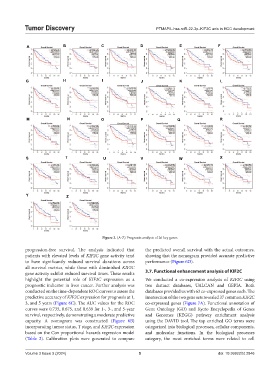
                                             Figure 2. (A-Z) Prognosis analysis of 26 key genes


            progression-free survival. The analysis indicated that   the  predicted  overall  survival  with  the  actual  outcomes,
            patients with elevated levels of KIF2C gene activity tend   showing that the nomogram provided accurate predictive
            to have significantly reduced survival durations across   performance (Figure 6D).
            all survival metrics, while those with diminished KIF2C
            gene activity exhibit reduced survival times. These results   3.7. Functional enhancement analysis of KIF2C
            highlight  the potential  role of  KIF2C  expression  as a   We conducted a co-expression analysis of  KIF2C using
            prognostic indicator in liver cancer. Further analysis was   two  distinct databases, UALCAN  and  GEPIA.  Both
            conducted on the time-dependent ROC curves to assess the   databases provided us with 63 co-expressed genes each. The
            predictive accuracy of KIF2C expression for prognosis at 1,   intersection of the two gene sets revealed 37 common KIF2C
            3, and 5 years (Figure 6C). The AUC values for the ROC   co-expressed genes (Figure 7A). Functional annotation of
            curves were 0.735, 0.675, and 0.639 for 1-, 3-, and 5-year   Gene Ontology (GO) and Kyoto Encyclopedia of Genes
            survival, respectively, demonstrating a moderate predictive   and Genomes (KEGG) pathway enrichment analysis
            capacity. A  nomogram was constructed (Figure  6B)   using the DAVID tool. The top enriched GO terms were
            incorporating tumor status, T stage, and KIF2C expression   categorized into biological processes, cellular components,
            based on the Cox proportional hazards regression model   and molecular functions. In the biological processes
            (Table 2). Calibration plots were generated to compare   category, the most enriched terms were related to cell


            Volume 3 Issue 3 (2024)                         5                                 doi: 10.36922/td.2846

