


Page 85 - TD-3-3
P. 85
Tumor Discovery                                        PTMAP5–hsa-miR-22-3p–KIF2C axis in HCC development


            A


            B                                            C                           D


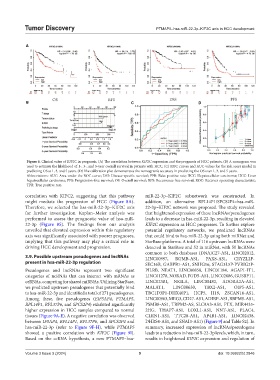
            Figure 6. Clinical value of KIF2C in prognosis. (A) The correlation between KIF2C expression and the prognosis of HCC patients. (B) A nomogram was
            used to estimate the likelihood of 1-, 3-, and 5-year overall survival in patients with HCC. (C) ROC curves and AUC values for the risk score model in
            predicting OS at 1, 3, and 5 years. (D) The calibration plot demonstrates the nomogram’s accuracy in predicting the OS over 1, 3, and 5 years.
            Abbreviations: AUC: Area under the ROC curve; DSS: Disease-specific survival; FPR: False positive rate; HCC: Hepatocellular carcinoma; HCC: Liver
            hepatocellular carcinoma; PFS: Progression-free survival; OS: Overall survival; RFS: Recurrence-free survival; ROC: Receiver operating characteristic;
            TPR: True positive rate.

            correlation with KIFC2, suggesting that this pathway   miR-22-3p–KIF2C subnetwork was constructed. In
            might mediate the progression of HCC (Figure  8A).   addition, an alternative RPL14P1/SPCS2P4–hsa-miR-
            Therefore, we selected the hsa-miR-22-3p–KIF2C axis   22-3p–KIF2C network was proposed. The study revealed
            for  further  investigation.  Kaplan–Meier  analysis  was   that heightened expression of these lncRNAs/pseudogenes
            performed to assess the prognostic value of hsa-miR-  leads to a decrease in hsa-miR-22-3p, resulting in elevated
            22-3p (Figure  8S). The findings from our analysis   KIF2C expression as HCC progresses. To further explore
            unveiled that elevated expression within this regulatory   potential regulatory networks, we predicted lncRNAs
            axis was significantly associated with poorer prognoses,   that could bind to hsa-miR-22-3p using both miRNet and
            implying that this pathway may play a critical role in   StarBase platforms. A total of 116 upstream lncRNAs were
            driving HCC development and progression.           detected in StarBase and 52 in miRNet, with 50 lncRNAs
                                                               common to both databases (DNAJC27-AS1, LINC02012,
            3.9. Possible upstream pseudogenes and lncRNAs     LINC00997,   RGMB-AS1,    PAX8-AS1,   CRYZL2P-
            present in hsa-miR-22-3p regulation                SEC16B, GABPB1-AS1, SNHG16, STAG3L5P-PVRIG2P-
            Pseudogenes and lncRNAs represent two significant   PILRB, NEAT1, LINC00858, LINC01184, AGAP1-IT1,
            categories of ncRNAs that can interact with mRNAs as   LINC01278, NORAD, FGD5-AS1, LINC02086, GUSBP11,
            ceRNAs, competing for shared miRNAs. Utilizing StarBase,   LINC02381, NKILA, LINC00482, ADORA2A-AS1,
            we predicted upstream pseudogenes that potentially bind   MALAT1,  LINC00630,  TBX2-AS1,  OIP5-AS1,
            to hsa-miR-22-3p and identified a total of 271 pseudogenes.   TBC1D3P1-DHX40P1, HCP5, H19, ZSCAN16-AS1,
            Among these, five pseudogenes (EIF5AP4,  PTMAP5,   LINC00963, MEG3, CD27-AS1, ADIRF-AS1, RBPMS-AS1,
            RPL14P1, RPL37P6, and SPCS2P4) exhibited significantly   PSMB8-AS1, TRPM2-AS, SLC9A3-AS1, FTX, MIR4435-
            higher expression in HCC samples compared to normal   2HG, THAP7-AS1, LOXL1-AS1, NNT-AS1, PLAC4,
            tissues (Figure 9A-E). A negative correlation was observed   CLRN1-AS1, TTC28-AS1, AP4B1-AS1, LINC02438,
            between IF5AP4, RPL14P1, RPL37P6, and SPCS2P4 and   DHRS4-AS1, and SNAI3-AS1) (Figure 9J and Table S2). In
            hsa-miR-22-3p (refer to  Figure  9F-H), while  PTMAP5   summary, increased expression of lncRNAs/pseudogene
            showed a positive correlation with  KIF2C (Figure  9I).   leads to a reduction in hsa-miR-22-3p levels, which, in turn,
            Based on the ceRNA hypothesis, a new PTMAP5–hsa-   results in heightened KIF2C expression and regulation of


            Volume 3 Issue 3 (2024)                         9                                 doi: 10.36922/td.2846

