


Page 90 - TD-3-3
P. 90
Tumor Discovery                                        PTMAP5–hsa-miR-22-3p–KIF2C axis in HCC development


            A                 B                   C                   D                   E


            F                 G                   H                    I                   J


            K                  L                   M                  N                   O


            P                 Q                   R                   S                    T


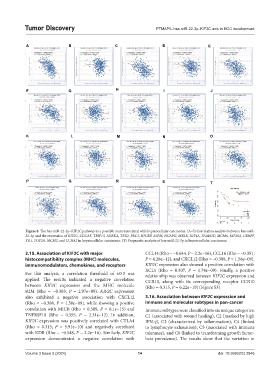
            Figure 8. The has-miR-22-3p–KIF2C pathway as a possible route associated with hepatocellular carcinoma. (A–S) Correlation analysis between hsa-miR-
            22-3p and the expression of KIF2C, CDCA5, TRIP13, AURKA, TPX2, PRC1, HJURP, ASPM, NCAPG, MELK, KIF4A, FAM83D, MCM6, KIF20A, CENPF,
            TK1, TOP2A, MCM2, and CCNA2 in hepatocellular carcinoma. (T) Prognostic analysis of has-miR-22-3p in hepatocellular carcinoma.

            3.15. Association of KIF2C with major              CCL14 (Rho = −0.644, P = 2.2e−16), CCL16 (Rho = −0.351,
            histocompatibility complex (MHC) molecules,        P = 4.28e−12), and CXCL12 (Rho = −0.308, P = 1.58e−09).
            immunomodulators, chemokines, and receptors        KIF2C expression also showed a positive correlation with
                                                               XCL1 (Rho = 0.307,  P = 1.74e−09). Finally, a positive
            For this analysis, a correlation threshold of ±0.3 was   relationship was observed between KIF2C expression and
            applied. The results indicated a negative correlation   CCR10, along with its corresponding receptor CCR10
            between  KIF2C  expression and the MHC molecule    (Rho = 0.315, P = 6.22e−10) (Figure S3).
            B2M  (Rho =  −0.303,  P  = 2.97e−09).  KIF2C  expression
            also exhibited a negative association with CXCL12   3.16. Association between KIF2C expression and
            (Rho = −0.308, P = 1.58e−09), while showing a positive   immune and molecular subtypes in pan-cancer
            correlation with MICB (Rho = 0.389,  P = 6.1e−15) and   Immune subtypes were classified into six unique categories:
            TNFRSF18 (Rho = 0.355,  P = 2.31e−12). In addition,   C1 (associated with wound healing), C2 (marked by high
            KIF2C expression was positively correlated with CTLA4   IFN-γ), C3 (characterized by inflammation), C4 (linked
            (Rho = 0.315,  P = 5.91e−10) and negatively correlated   to lymphocyte exhaustion), C5 (associated with immune
            with KDR (Rho = −0.548, P = 2.2e−16). Similarly, KIF2C   tolerance), and C6 (linked to transforming growth factor-
            expression demonstrated a negative correlation with   beta prevalence). The results show that the variation in


            Volume 3 Issue 3 (2024)                         14                                doi: 10.36922/td.2846

