


Page 92 - TD-3-3
P. 92
Tumor Discovery                                        PTMAP5–hsa-miR-22-3p–KIF2C axis in HCC development


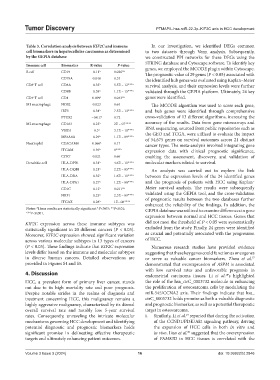
            Table 3. Correlation analysis between KIF2C and immune   In our investigation, we identified DEGs common
            cell biomarkers in hepatocellular carcinoma as determined   to  two datasets  through  Venn  analysis. Subsequently,
            by the GEPIA database                              we constructed PPI networks for these DEGs using the
                                                               STRING database and Cytoscape software. To identify key
            Immune cell    Biomarker   R‑value     P‑value     genes, we employed the MCODE plugin within Cytoscape.
            B cell         CD19          0.11 a   0.026* a     The prognostic value of 29 genes (P < 0.05) associated with
                           CD79A        0.048     0.33         the identified hub genes was evaluated using Kaplan–Meier
            CD8 T cell     CD8A          0.33 a   5.5E – 12*** a  survival analysis, and their expression levels were further
               +
                           CD8B          0.38 a   1.1E – 15*** a  validated through the GEPIA platform. Ultimately, 24 key
               +
            CD4 T cell     CD4          0.099 a   0.043* a     genes were identified.
            M1 macrophage  NOS2         0.023     0.64           The MCODE algorithm was used to score each gene,
                           IRF5          0.34 a   7.5E – 13*** a  and hub genes were identified through comprehensive
                           PTGS2        −0.017    0.72         cross-validation of 13 different algorithms, increasing the
            M2 macrophage  CD163         0.25 a   2E – 07*** a  accuracy of the results. Data from gene microarrays and
                           VSIG4         0.3 a    3.1E – 10*** a  RNA sequencing, sourced from public repositories such as
                           MS4A4A        0.29 a   1.1E – 09*** a  the GEO and TCGA, were utilized to evaluate the impact
                                                               of 54,675 genes on survival outcomes across 21 distinct
            Neutrophil     CEACAM8      0.066 a   0.17         cancer types. The meta-analysis involved integrating gene
                           ITGAM         0.39 a   0*** a       expression data with clinical prognostic significance,
                           CCR7         0.021     0.66         enabling  the  assessment,  discovery, and validation  of
            Dendritic cell  HLA-DPB1     0.31 a   4.6E – 11*** a  molecular markers related to survival.
                           HLA-DQB1      0.21 a   2.2E – 05*** a  An  analysis was  carried  out to  explore the  link
                           HLA-DRA       0.32 a   1.6E – 11*** a  between the expression levels of the 24 identified genes
                           HLA-DPA1      0.27 a   1.2E – 08*** a  and the prognosis of patients with HCC using Kaplan‒
                           CD1C          0.12 a   0.011* a     Meier survival analysis. The results were subsequently
                           NRP1          0.23 a   2.3E – 09*** a  validated using the GEPIA tool, and the cross-validation
                                                               of prognostic results between the two databases further
                           ITGAX         0.28 a   1E--08*** a  enhanced the reliability of the findings. In addition, the
            Notes:  These results are statistically significant.*P<0.05; **P<0.01;   GEPIA database was utilized to examine differences in gene
                 a
            ***P<0.001.
                                                               expression between normal and HCC tissues. Genes that
            KIF2C expression across these immune subtypes was   did not meet the threshold of P < 0.05 were systematically
            statistically significant in 20 different cancers (P < 0.05).   excluded from the study. Finally, 24 genes were identified
            Moreover, KIF2C expression showed significant variation   as crucial and potentially associated with the progression
            across various molecular subtypes in 13 types of cancers   of HCC.
            (P < 0.05). These findings indicate that KIF2C expression   Numerous research studies have provided evidence
            levels differ based on the immune and molecular subtypes   suggesting that these key genes could function as oncogenes
            in  diverse  human cancers. Detailed  observations are   or  serve  as  valuable  cancer  biomarkers.  Zhou  et al.
                                                                                                            17
            provided in Figures S4 and S5.                     demonstrated that overexpression of ASPM is associated
                                                               with low survival rates and unfavorable prognosis in
            4. Discussion                                      endometrial carcinoma tissues. Li  et al. ’s highlighted
                                                                                                 18
            HCC, a prevalent form of primary liver cancer, stands   the role of the hsa_cirC_0003732 molecule in enhancing
            out due to its high  mortality  rate and poor  prognosis.   the proliferation of osteosarcoma cells by modulating the
            Despite notable strides in the realms of diagnosis and   miR-545/CCNA2 axis. Their findings indicate that hsa_
            treatment concerning HCC, this malignancy remains a   cirC_0003732 holds promise as both a valuable diagnostic
            highly aggressive malignancy, characterized by its dismal   and prognostic biomarker, as well as a potential therapeutic
            overall  survival  rate  and  notably  low  5-year  survival   target in osteosarcoma.
                                                                                19
            rates.  Consequently,  unraveling  the  intricate  molecular   i.   Similarly, Li et al.  reported that during the activation
            mechanisms governing HCC development and identifying   of the CCND1/PI3K/Akt signaling pathway, driving
            potential diagnostic and prognostic biomarkers holds   the expansion of HCC cells in both  in vitro and
            significant promise in delineating effective therapeutic   in vivo. Liao et al.  suggested that the overexpression
                                                                                 20
            targets and ultimately enhancing patient outcomes.    of  FAM83D in HCC tissues is correlated with the

            Volume 3 Issue 3 (2024)                         16                                doi: 10.36922/td.2846

