


Page 84 - TD-3-3
P. 84
Tumor Discovery                                        PTMAP5–hsa-miR-22-3p–KIF2C axis in HCC development


            A                                                              B


            C                               D                                  E


            F                                G                                  H


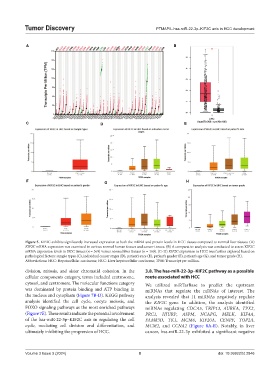
            Figure 5. KIF2C exhibits significantly increased expression at both the mRNA and protein levels in HCC tissues compared to normal liver tissues. (A)
            KIF2C mRNA expression was examined in various normal human tissues and cancer tissues. (B) A comparative analysis was conducted to assess KIF2C
            mRNA expression levels in HCC tissues (n = 369) versus normal liver tissues (n = 160). (C–H) KIF2C expression in HCC was further explored based on
            pathological factors: sample types (C), individual cancer stages (D), patient’s race (E), patient’s gender (F), patient’s age (G), and tumor grade (H).
            Abbreviations: HCC: Hepatocellular carcinoma; HCC: Liver hepatocellular carcinoma; TPM: Transcript per million.
            division, mitosis, and sister chromatid cohesion. In the   3.8. The has-miR-22-3p–KIF2C pathway as a possible
            cellular components category, terms included centrosome,   route associated with HCC
            cytosol, and centromere. The molecular functions category   We utilized miRTarBase to predict the upstream
            was dominated by protein binding and ATP binding in   miRNAs that regulate the mRNAs of interest. The
            the nucleus and cytoplasm (Figure 7B-D). KEGG pathway   analysis revealed that 11 miRNAs negatively regulate
            analysis identified the cell cycle, oocyte meiosis, and   the  KIF2C  gene. In addition, the analysis identified
            FOXO signaling pathways as the most enriched pathways   miRNAs  regulating  CDCA5,  TRIP13,  AURKA,  TPX2,
            (Figure 7E). These results indicate the potential involvement   PRC1,  HJURP,  ASPM,  NCAPG,  MELK,  KIF4A,
            of the hsa-miR-22-3p–KIF2C axis in regulating the cell   FAM83D,  TK1,  MCM6,  KIF20A,  CENPF,  TOP2A,
            cycle, mediating cell division and differentiation, and   MCM2, and  CCNA2  (Figure  8A-R). Notably, in liver
            ultimately inhibiting the progression of HCC.      cancer, hsa-miR-22-3p exhibited a significant negative


            Volume 3 Issue 3 (2024)                         8                                 doi: 10.36922/td.2846

