


Page 51 - AIH-1-3
P. 51
Artificial Intelligence in Health                                  Predicting mortality in COVID-19 using ML


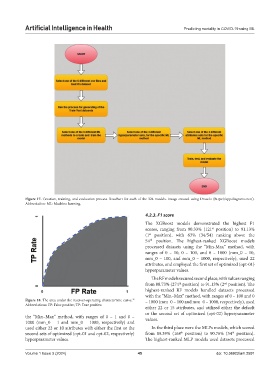
            Figure 17. Creation, training, and evaluation process flowchart for each of the 324 models. Image created using Draw.io (https://app.diagrams.net/).
            Abbreviation: ML: Machine learning.

                                                               4.2.3. F1 score
                                                               The XGBoost models demonstrated the highest F1
                                                               scores, ranging from 90.33% (121   position) to 91.13%
                                                                                           st
                                                               (1   position), with 63% (34/54) ranking above the
                                                                st
                                                               54   position. The highest-ranked XGBoost models
                                                                 th
                                                               processed datasets using the “Min-Max” method, with
                                                               ranges of 0 – 10, 0 – 100, and 0 – 1000 (mm_0 – 10,
                                                               mm_0  – 100, and mm_0  – 1000,  respectively), used  22
                                                               attributes, and employed the first set of optimized (opt-01)
                                                               hyperparameter values.
                                                                 The RF models secured second place, with values ranging
                                                               from 88.73% (274  position) to 91.13% (2  position). The
                                                                             th
                                                                                                nd
                                                               highest-ranked  RF  models  handled  datasets  processed
                                                               with the “Min–Max” method, with ranges of 0 – 100 and 0
            Figure 18. The area under the receiver-operating characteristic curve.    – 1000 (mm_0 – 100 and mm_0 – 1000, respectively), used
                                                         37
            Abbreviations: FP: False positive; TP: True positive.
                                                               either 22 or 15 attributes, and utilized either the default
                                                               or the second set of optimized (opt-02) hyperparameter
            the  “Min–Max” method, with ranges  of 0  – 1  and 0  –   values.
            1000 (mm_0 – 1 and mm_0 – 1000, respectively) and
            used either 22 or 10 attributes with either the first or the   In the third place were the MLPs models, which scored
            second sets of optimized (opt-01 and opt-02, respectively)   from 89.39% (168   position) to 90.76% (34   position).
                                                                                                    th
                                                                              th
            hyperparameter values.                             The highest-ranked MLP models used datasets processed
            Volume 1 Issue 3 (2024)                         45                               doi: 10.36922/aih.2591

