


Page 52 - AIH-1-3
P. 52
Artificial Intelligence in Health                                  Predicting mortality in COVID-19 using ML


                         A


                         B


                         C


                         D


                         E


                             F


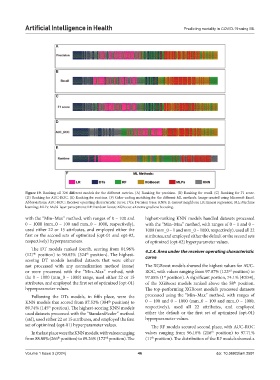
            Figure 19. Ranking all 324 different models for the different metrics. (A) Ranking for precision. (B) Ranking for recall. (C) Ranking for F1 score.
            (D) Ranking for AUC-ROC. (E) Ranking for runtime. (F) Color-coding matching for the different ML methods. Image created using Microsoft Excel.
            Abbreviations: AUC-ROC: Receiver operating characteristic curve; DTs: Decision trees; KNN: K-nearest neighbors; LR: Linear regression; ML: Machine
            learning; MLPs: Multi-layer perceptrons; RF: Random forest; XGBoost: eXtreme gradient boosting.

            with the “Min–Max” method, with ranges of 0 – 100 and   highest-ranking KNN models handled datasets processed
            0 – 1000 (mm_0 – 100 and mm_0 – 1000, respectively),   with the “Min–Max” method, with ranges of 0 – 1 and 0 –
            used either 22 or 15 attributes, and employed either the   1000 (mm_0 – 1 and mm_0 – 1000, respectively), used all 22
            first or the second sets of optimized (opt-01 and opt-02,   attributes, and employed either the default or the second sets
            respectively) hyperparameters.                     of optimized (opt-02) hyperparameter values.
              The DT models ranked fourth, scoring from 84.96%
            (127   position)  to  90.03%  (324   position).  The  highest-  4.2.4. Area under the receiver operating characteristic
                                      th
               th
                                                               curve
            scoring DT models handled datasets that were either
            not processed with any normalization method (none)   The XGBoost models showed the highest values for AUC-
                                                                                                  nd
            or  were  processed  with  the  “Min–Max”  method,  with   ROC, with values ranging from 97.07% (122  position) to
            the 0 – 1000 (mm_0 – 1000) range, used either 22 or 15   97.88% (1  position). A significant portion, 74.1% (40/54),
                                                                       st
            attributes, and employed the first set of optimized (opt-01)   of the XGBoost models ranked above the 58   position.
                                                                                                    th
            hyperparameter values.                             The top-performing XGBoost model’s processed datasets
              Following the DTs models, in fifth place, were the   processed using the “Min–Max” method, with ranges of
            KNN models that scored from 87.52% (304  position) to   0 – 100 and 0 – 1000 (mm_0 – 100 and mm_0 – 1000,
                                               th
            89.74% (145  position). The highest-scoring KNN models   respectively), used all 22 attributes, and employed
                      th
            used datasets processed with the “StandardScaler” method   either the default or the first set of optimized (opt-01)
            (std), used either 22 or 15 attributes, and employed the first   hyperparameter values.
            set of optimized (opt-01) hyperparameter values.     The RF models secured second place, with AUC-ROC
                                                                                           th
              In the last place were the KNN models, with values ranging   values ranging from 96.16% (216   position) to 97.71%
            from 88.88% (266  position) to 89.26% (172  position). The   (11  position). The distribution of the RF models showed a
                          th
                                                                 th
                                              nd
            Volume 1 Issue 3 (2024)                         46                               doi: 10.36922/aih.2591

