


Page 63 - AIH-1-4
P. 63
Artificial Intelligence in Health                                   A fuzzy system for heartbeat classification


                         A                                   B


                         C                                   D


                         E                                    F


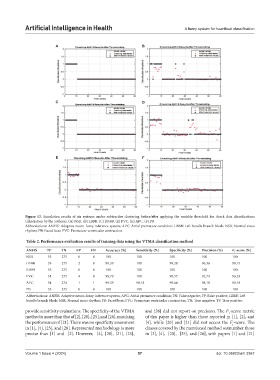
            Figure  13. Simulation results of six systems under subtractive clustering before/after applying the variable threshold for check data classifications
            (illustration by the authors). (A) NSR. (B) LBBB. (C) RBBB. (E) PVC. (E) APC. (F) PB
            Abbreviations: ANFIS: Adaptive neuro-fuzzy inference system; APC: Atrial premature condition; LBBB: Left bundle branch block; NSR: Normal sinus
            rhythm; PB: Paced beat; PVC: Premature ventricular contraction.
            Table 2. Performance evaluation results of training data using the VTMA classification method

            ANFIS    TP    TN     FP    FN    Accuracy (%)  Sensitivity (%)  Specificity (%)  Precision (%)  F -score (%)
                                                                                                     1
            NSR      55    275    0      0    100          100           100           100          100
            LBBB     53    275    2      0    99.39        100           99.28         96.36        98.15
            RBBB     55    275    0      0    100          100           100           100          100
            PVC      51    275    4      0    98.79        100           98.57         92.73        96.23
            APC      54    274    1      1    99.39        98.18         99.64         98.18        98.18
            PB       55    275    0      0    100          100           100           100          100
            Abbreviations: ANFIS: Adaptive neuro-fuzzy inference system; APC: Atrial premature condition; FN: False negative; FP: False positive; LBBB: Left
            bundle branch block; NSR: Normal sinus rhythm; PB: Paced beat; PVC: Premature ventricular contraction; TN: True negative; TP: True positive.

            provide sensitivity evaluations. The specificity of the VTMA   and [26] did not report on precision. The F -score metric
                                                                                                  1
            method is more than that of [2], [20], [25], and [26], matching   of this paper is higher than those reported in [1], [2], and
            the performance of [21]. There was no specificity assessment   [4], while [20] and [21] did not access the  F -score. The
                                                                                                    1
            in [1], [4], [25], and [26]. Represented methodology is more   classes covered by the mentioned method outnumber those
            precise than [1] and   [2]. However,   [4], [20], [21], [25],   in [2], [4],  [20],  [25], and [26], with papers [1] and [21]


            Volume 1 Issue 4 (2024)                         57                               doi: 10.36922/aih.3367

