


Page 112 - AIH-2-2
P. 112
Artificial Intelligence in Health                                 AI in early breast cancer diagnosis: A review


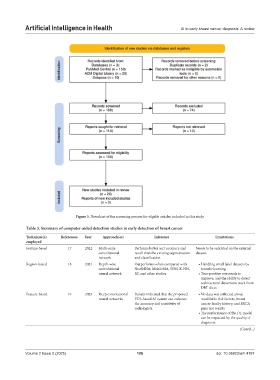
                                 Figure 3. Flowchart of the screening process for eligible articles included in this study

            Table 3. Summary of computer‑aided detection studies in early detection of breast cancer
            Technique(s)   References  Year  Approach(es)          Inference                 Limitations
            employed
            Feature-based     17     2022  Multi-scale    Performs better w.r.t accuracy and   Needs to be validated on the external
                                           convolutional   recall than the existing segmentation   dataset.
                                           network        and classification.
            Region-based      18     2021  Depth-wise     Outperforms when compared with   •  Handling small label datasets by
                                           convolutional   ShuffelNet, MobileNet, SVM, K-NN,   transfer learning
                                           neural network  RF, and other studies.    •  True‑positive rate needs to
                                                                                      improve, and the ability to detect
                                                                                      architectural distortions track from
                                                                                      DBT slices
            Feature-based     19     2023  Deep convolutional   Results indicated that the proposed   •  No data was collected about
                                           neural networks  EDL-based AI system can enhance   modifiable risk factors, breast
                                                          the accuracy and sensitivity of   cancer family history, and BRCA
                                                          radiologists.               gene test results
                                                                                     •  The performance of the DL model
                                                                                      can be impacted by the quality of
                                                                                      diagnosis.
                                                                                                       (Cont’d...)


            Volume 2 Issue 2 (2025)                        106                               doi: 10.36922/aih.4197

