


Page 76 - AIH-2-4
P. 76
Artificial Intelligence in Health                                   Synthetic data for obesity level prediction


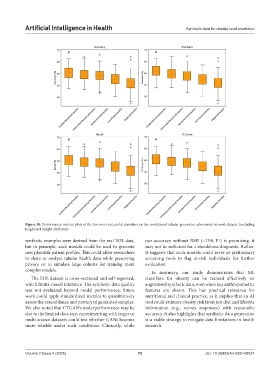
            Figure 30. Performance metrics plots of the five most successful classifiers on the conditional tabular generative adversarial network dataset (excluding
            height and weight attributes)

            synthetic examples were derived from the real EOL data,   our accuracy without BMI (~75% F1) is promising, it
            but  in  principle,  such  models  could  be  used  to  generate   may not be sufficient for a standalone diagnosis. Rather,
            new plausible patient profiles. This could allow researchers   it suggests that such models could serve as preliminary
            to share or analyze tabular health data while preserving   screening tools to flag at-risk individuals for further
            privacy  or to  simulate  large  cohorts for  training  more   evaluation.
            complex models.                                      In summary, our study demonstrates that ML
              The EOL dataset is cross-sectional and self-reported,   classifiers for obesity can be trained effectively on
            which limits causal inference. The synthetic data quality   augmented synthetic data, even when key anthropometric
            was not evaluated beyond model performance; future   features are absent. This has practical relevance for
            work could apply standardized metrics to quantitatively   nutritional and clinical practice, as it implies that an AI
            assess the resemblance and privacy of generated samples.   tool could estimate obesity risk from just diet and lifestyle
            We also noted that CTGAN’s underperformance may be   information (e.g., survey responses) with reasonable
            due to the limited data size; experimenting with larger or   accuracy. It also highlights that synthetic data generation
            multi-source datasets could test whether GANs become   is a viable strategy to mitigate data limitations in health
            more reliable under such conditions. Clinically, while   research.


            Volume 2 Issue 4 (2025)                         70                          doi: 10.36922/AIH025140027

