


Page 87 - ARNM-2-3
P. 87
Advances in Radiotherapy
            & Nuclear Medicine                                                    OrthoCT experimental proof of concept


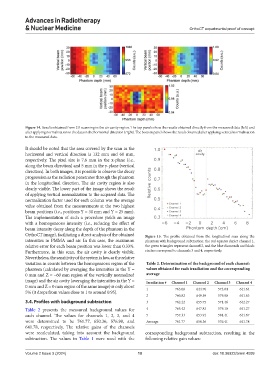
            Figure 14. Results obtained from 2D scanning in the air cavity region. The top panels show the results obtained directly from the measured data (left) and
            after applying normalization to the data in the horizontal direction (right). The bottom panel shows the result obtained after applying vertical normalization
            to the measured data.

            It should be noted that the area covered by the scan in the
            horizontal and vertical direction is 132  mm and 60  mm,
            respectively. The pixel size is 7.6  mm in the x-plane (i.e.,
            along the beam direction) and 5 mm in the y-plane (vertical
            direction). In both images, it is possible to observe the decay
            progression as the radiation penetrates through the phantom
            in the longitudinal direction. The air cavity region is also
            clearly visible. The lower part of the image shows the result
            of applying vertical normalization to the acquired data. The
            normalization factor used for each column was the average
            value obtained from the measurements at the two highest
            beam positions (i.e., positions Y = 30 mm and Y = 25 mm).
            The implementation of such a procedure yields an image
            with a homogeneous intensity (i.e., reducing the effect of
            beam intensity decay along the depth of the phantom in the
            OrthoCT image), facilitating a direct analysis of the obtained   Figure  15. The profile obtained from the longitudinal scan along the
            intensities in PMMA and air. In this case, the maximum   phantom with background subtraction: the red squares depict channel 1,
            relative error for each beam position was lower than 0.33%.   the green triangles represent channel 2, and the blue diamonds and black
            Furthermore, in this scan, the air cavity is clearly visible.   circles correspond to channels 3 and 4, respectively.
            Nevertheless, the sensitivity of the system is low, as the relative
            variation in counts between the homogeneous region of the   Table 2. Determination of the background of each channel:
            phantom (calculated by averaging the intensities in the Y =   values obtained for each irradiation and the corresponding
            0 mm and Z = −60 mm region of the vertically normalized   average
            image) and the air cavity (averaging the intensities in the Y =   Irradiation #  Channel 1  Channel 2  Channel 3  Channel 4
            0 mm and Z = 0 mm region of the same image) is only about   1   763.08   644.70   573.04   641.64
            5% (it drops from values close to 1 to around 0.95).
                                                               2            760.82   649.59   579.90   641.63
            3.4. Profiles with background subtraction          3            762.22   655.75   571.46   642.27

            Table 2  presents the measured background values for   4        765.42   647.83   579.10   641.27
            each  channel.  The  values  for  channels  1,  2, 3,  and  4   5  757.33  653.91  581.41  641.67
            were determined to be 761.77, 650.36, 576.98, and   Average     761.77   650.36   576.41   641.78
            641.78, respectively. The relative gains  of the channels
            were recalculated, taking into account the background   corresponding background subtraction, resulting in the
            subtraction. The values in  Table 1 were used with the   following relative gain values:


            Volume 2 Issue 3 (2024)                         10                             doi: 10.36922/arnm.4099

