


Page 84 - ARNM-3-1
P. 84
Advances in Radiotherapy
            & Nuclear Medicine                                                Cone beam-focused GK dosimetric analysis


                                                                                    A                      B


                                                                                    C                      D


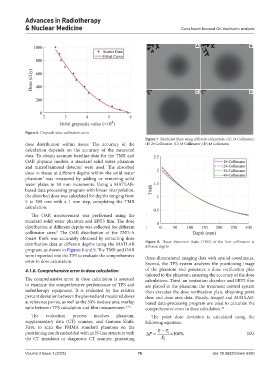
            Figure 6. Grayscale-dose calibration curve
                                                               Figure 7. Irradiated films using different collimators. (A) 1# Collimator;
            dose distribution within tissue. The accuracy of the   (B) 2# Collimator; (C) 3# Collimator; (D) 4# Collimator.
            calculation depends on the accuracy of the measured
            data. To obtain accurate baseline data for the TMR and
            OAR physical models, a standard solid water phantom
            and microDaimond detector were used. The absorbed
            dose in tissue at different depths within the solid water
            phantom  was measured by adding or removing solid
                   7
            water plates in 30  mm increments. Using a MATLAB-
            based data processing program with linear interpolation,
            the absorbed dose was calculated for depths ranging from
            5 to 300  mm with a 1  mm step, completing the TMR
            calculation.
              The OAR measurement was performed using the
            standard solid water phantom and EBT3 film. The dose
            distribution at different depths was collected for different
            collimator sizes.  The OAR distribution of the ZND-A
                         8
            Smart Knife was accurately obtained by extracting dose
            distribution data at different depths using the MATLAB   Figure  8.  Tissue Maximum Ratio (TMR) of the four collimators at
                                                               different depths
            program, as shown in Figures 8 and 9. The TMR and OAR
            were imported into the TPS to evaluate the comprehensive   three-dimensional imaging data with spatial coordinates.
            error in dose calculation.                         Second, the TPS system analyzes the positioning image
            4.1.6. Comprehensive error in dose calculation     of the phantom and generates a dose verification plan
                                                               tailored to the phantom, ensuring the accuracy of the dose
            The  comprehensive  error  in  dose  calculation  is  assessed   calculations. Third, an ionization chamber and EBT3 film
            to examine the comprehensive performance of TPS and   are placed in the phantom; the treatment control system
            radiotherapy equipment. It is evaluated by the relative   then executes the dose verification plan, obtaining point
            percent deviation between the planned and measured doses   dose and dose area data. Finally, ImageJ and MATLAB-
            at reference points, as well as the 50% isodose area overlap   based data-processing program are used to calculate the
            ratio between TPS calculation and film measurement. 9,10  comprehensive error in dose calculation. 13
              The   evaluation  process  involves  phantom,      The point dose deviation is calculated using the
            supplementary data (CT)  scanner, and  Gamma  Knife.   following equation:
            First, to scan the PMMA standard phantom on the
            positioning couch embedded with an N-line structure with   ∆ =P  P 1 − P 0  × 100%            (IX)
            the CT simulator or diagnostic CT scanner, generating     P 0


            Volume 3 Issue 1 (2025)                         76                             doi: 10.36922/arnm.6280

