


Page 87 - ARNM-3-1
P. 87
Advances in Radiotherapy
            & Nuclear Medicine                                                Cone beam-focused GK dosimetric analysis


                         A                                    B


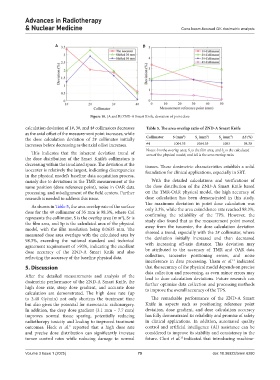
                                       Figure 10. (A and B) ZND-A Smart Knife, deviation of point dose

            calculation deviation of 1#, 3#, and 4# collimators decreases   Table 5. The area overlap ratio of ZND‑A Smart Knife
            as the axial offset of the measurement point increases, while      2         2         2
            the dose calculation deviation of 2# collimator initially   Collimator  S (mm )  S  (mm )  S  (mm )  ∆S (%)
                                                                                     r
                                                                                               p
            increases before decreasing as the axial offset increases.  #4  1064.55  1064.55    1083     98.30
                                                               Notes: S is the overlap area; S  is the film area; and S  is the calculated
              This indicates that the inherent deviation trend of   area of the physical model; and ∆S is the area overlap ratio.
                                                                                  r
                                                                                                p
            the dose distribution of the Smart Knife’s collimators is
            decreasing within the irradiated space. The deviation at the   tissues. These dosimetric characteristics establish a solid
            isocenter is relatively the largest, indicating discrepancies   foundation for clinical applications, especially in SRT.
            in the physical model’s baseline data acquisition process,
            mainly due to deviations in the TMR measurement at the   With the detailed calculations and verifications of
            same position (dose reference point), noise in OAR data   the  dose  distribution  of  the  ZND-A  Smart  Knife based
            processing, and misalignment of the field centers. Further   on the TMR-OAR physical model, the high accuracy of
            research is needed to address this issue.          dose  calculation  has  been  demonstrated  in  this  study.
                                                               The  maximum  deviation  in  point  dose  calculation  was
              As shown in Table 5, the area overlap rate of the surface
            dose for the 4# collimator of 35 mm is 98.3%, where Col   only 3.3%, while the area coincidence rate reached 98.3%,
                                                               confirming the reliability of the TPS. However, the
            represents the collimator, S is the overlap area (mm ), Sr is
                                                     2
            the film area, and Sp is the calculated area of the physical   study  also  found  that  as the measurement  point  moved
            model, with  the  film  resolution  being  0.0635  mm.  The   away from the isocenter, the dose calculation deviation
            measured dose area overlaps with the calculated area by   showed a trend, especially with the 2# collimator, where
                                                               the deviation initially increased and then decreased
            98.3%, exceeding the national standard and technical
            agreement requirement of >90%, indicating the excellent   with  increasing off-axis  distance.  This  deviation  may
            dose accuracy of the ZND-A Smart Knife and also    be attributed to the accuracy of TMR and OAR data
            reflecting the accuracy of the baseline physical data.  collection, isocenter positioning errors, and noise
                                                               interference  in  data  processing.  Tham  et  al.   indicated
                                                                                                    12
            5. Discussion                                      that the accuracy of the physical model depends on precise
                                                               data collection and processing, as even minor errors may
            After the detailed measurements and analysis of the   lead  to  dose  calculation  deviations.  Future  research  can
            dosimetric performance of the ZND-A Smart Knife, the   further optimize data collection and processing methods
            high dose rate, steep dose gradient, and accurate dose   to improve the overall accuracy of the TPS.
            calculation are demonstrated. The high dose rate (up
            to 3.48  Gy/min) not only shortens the treatment time   The remarkable performance of the ZND-A Smart
            but also gives the potential for stereotactic radiosurgery.   Knife in aspects such as positioning reference point
            In addition, the deep dose gradient (3.1 mm – 7.7 mm)   deviation, dose gradient, and dose calculation accuracy
            improves normal tissue sparing, potentially reducing   has fully demonstrated its reliability and promise of safety
            radiotherapy toxicity and leading to improved treatment   in clinical applications. In addition, automated quality
            outcomes. Heck  et al.  reported that a high dose rate   control and artificial intelligence (AI) assistance can be
                              2
            and precise dose distribution can significantly increase   considered to improve its stability and consistency in the
            tumor control rates while reducing damage to normal   future. Choi  et al. indicated that introducing machine-
                                                                              13

            Volume 3 Issue 1 (2025)                         79                             doi: 10.36922/arnm.6280

