


Page 75 - DP-1-1
P. 75
Design+                                                                Defect-oriented BIST for AMS circuits


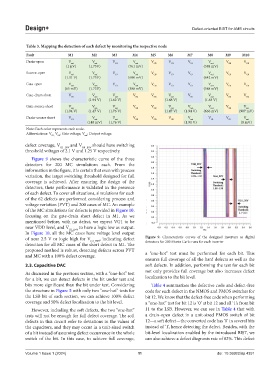
            Table 3. Mapping the detection of each defect by monitoring the respective node
            Fault             M1        M2       M3      M4      M5     M6       M7      M8      M9     M10
            Drain-open        V out     V out    V G1     V out  V G8    V G1    V G1     V out  V G8    V G8
                             (1 µV)    (1.73V)          (761 mV)                        (588 mV)
            Source-open       V out     V out    V G1     V out  V G8    V G1    V G1     V out  V G8    V G8
                             (1.31 V)  (1.73V)          (690 mV)                        (642 mV)
            Gate-open         V out     V out    V G1     V out  V G8    V G1    V G1     V out  V G8    V G8
                             (65 mV)   (1.73V)          (588 mV)                        (588 mV)
            Gate-drain short  V G1      V out    V out    V G8   V G8    V out   V G1     V out  V G8    V G8
                                       (1.94 V)  (1.62 V)              (1.48 V)         (1.48 V)
            Gate-source short  V out    V out    V out    V G8   V G8    V out   V out    V out  V G8    V out
                             (1.94 V)  (1.47 V)  (1.76 V)              (1.47 V)  (1.94 V)  (666 mV)    (907 mV)
            Drain-source short  V       V        V        V      V       V       V        V      V       V
                               G1        out      out      G8     G8      G8      out      G1     G1      out
                                      (148 mV)  (1.76 V)                       (1.91 V)                (8 mV)
            Note: Each color represents each node.
            Abbreviations: V V : Gate voltage; V : Output voltage.
                       G1,   G8      out
            defect coverage, V G1_INV  and V G8_INV  should have switching
            threshold voltages of 2.1 V and 1.25 V respectively.
              Figure  9 shows the characteristic curve of the three
            detectors for 200 MC simulations each. From the
            information in the figure, it is certain that even with process
            variation, the target switching threshold designed for full
            coverage is achieved. After ensuring the design of the
            detectors, their performance is validated in the presence
            of each defect. To cover all situations, simulations for each
            of the 62 defects are performed considering process and
            voltage variation (PVT) and 200 cases of MC. An example
            of the MC simulations for defects is provided in Figure 10,
            focusing  on  the  gate-drain  short  defect  in  M1.  As  we
            mentioned before, with no defect, we expect VG1 to be
            near VDD level, and V G1_INV  to have a logic low as output.
            In Figure 10, all the MC cases have voltage level output
            of near 2.5 V or logic high for V G1_INV , indicating defect   Figure  9. Characteristic curves of the designed inverters as digital
                                                               detectors for 200 Monte Carlo runs for each inverter
            detection for all MC cases of the short defect in M1. The
            proposed method is robust, detecting defects across PVT
            and MC with a 100% defect coverage.                a “one-hot” test must be performed for each bit. This
                                                               ensures full coverage of all the hard defects as well as the
            3.3. Capacitive DAC                                soft defects. In addition, performing the test for each bit
            As discussed in the previous section, with a “one-hot” test   not only provides full coverage but also increases defect
            for a bit, we can detect defects in the bit under test and   localization to the bit level.
            bits more significant than the bit under test. Considering   Table 4 summarizes the defective code and defect-free
            the structure in Figure 5 with only two “one-hot” tests for   code for each defect in the NMOS and PMOS switches for
            the LSB bit of each section, we can achieve 100% defect   bit 12. We know that the defect-free code when performing
            coverage and 50% defect localization to the bit level.  a “one-hot” test for bit 12 is ‘0’ at bit 12 and all ‘1’s from bit

              However, including the soft defects, the two “one-hot”   11 to the LSB. However, we can see in Table 4 that with
            tests will not be enough for full defect coverage. The soft   a  drain-open  defect  in  a  unit-sized  PMOS  switch  of  bit
            defects in this circuit refer to deviations in the values of   12—a soft defect—the converted code has ‘0’ in several bits
            the capacitors, and they may occur in a unit-sized switch   instead of ‘1’, hence detecting the defect. Besides, with the
            of a bit instead of assuming defect occurrence in the whole   bit-level localization enabled by the introduced BIST, we
            switch of the bit. In this case, to achieve full coverage,   can also achieve a defect diagnosis rate of 82%. This defect


            Volume 1 Issue 1 (2024)                         11                               doi: 10.36922/dp.4351

