


Page 25 - DP-2-3
P. 25
Design+                                                             Traditional handcrafting and sustainability


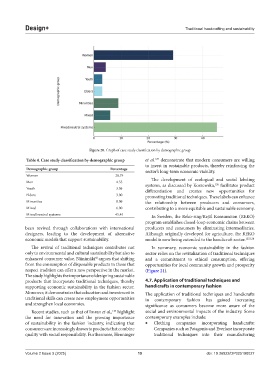
                                       Figure 20. Graph of case study classification by demographic group

                                                                   125
            Table 4. Case study classification by demographic group  et al.  demonstrate that modern consumers are willing
                                                               to invest in sustainable products, thereby reinforcing the
            Demographic group                   Percentage     sector’s long-term economic viability.
            Women                                 28.79
                                                                 The development of ecological and social labeling
            Men                                   4.55         systems, as discussed by Koszewska,  facilitates product
                                                                                            126
            Youth                                 3.03         differentiation and creates new opportunities for
            Elders                                3.00         promoting traditional techniques. These labels can enhance
            Minorities                            9.09         the relationship between producers and consumers,
            Mixed                                 6.00         contributing to a more equitable and sustainable economy.
            Mixed/neutral systems                 45.45          In Sweden, the Reko-ring/Rejäl Konsumtion (REKO)
                                                               program establishes closed-loop economic chains between
            been  revived  through  collaborations  with  international   producers and consumers by eliminating intermediaries.
            designers, leading to the development of alternative   Although originally developed for agriculture, the REKO
            economic models that support sustainability.       model is now being extended to the handicraft sector. 127,128
              The revival of traditional techniques  contributes not   In summary, economic sustainability in the fashion
            only to environmental and cultural sustainability but also to   sector relies on the revitalization of traditional techniques
            enhanced consumer value. Niinimäki argues that shifting   and a commitment to ethical consumption, offering
                                          66
            from the consumption of disposable products to those that   opportunities for local community growth and prosperity
            respect tradition can offer a new perspective in the market.   (Figure 21).
            The study highlights the importance of designing sustainable
            products that incorporate traditional techniques, thereby   4.7. Application of traditional techniques and
            supporting economic sustainability in the fashion sector.   handicrafts in contemporary fashion
            Moreover, it demonstrates that education and investment in   The application of traditional techniques and handicrafts
            traditional skills can create new employment opportunities   in  contemporary  fashion  has  gained  increasing
            and strengthen local economies.                    significance  as  consumers  become  more  aware  of  the
              Recent studies, such as that of Imran et al.,  highlight   social and environmental impacts of the industry. Some
                                                 124
            the need for innovation and the growing importance   contemporary examples include:
            of sustainability in the fashion industry, indicating that   •   Clothing  companies  incorporating  handicrafts:
            consumers are increasingly drawn to products that combine   Companies such as Patagonia and Everlane incorporate
            quality with social responsibility. Furthermore, Henninger   traditional  techniques into their manufacturing


            Volume 2 Issue 3 (2025)                         19                           doi: 10.36922/DP025190027

