


Page 22 - DP-2-3
P. 22
Design+                                                             Traditional handcrafting and sustainability


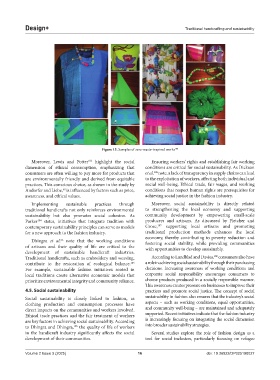
                                            Figure 15. Samples of zero-waste-inspired works 100

              Moreover, Lewis and Potter  highlight the social   Ensuring workers’ rights and establishing fair working
                                       103
            dimension  of  ethical  consumption,  emphasizing  that   conditions are critical for social sustainability. As Dickson
            consumers are often willing to pay more for products that   et al. note, a lack of transparency in supply chains can lead
                                                                  106
            are environmentally friendly and derived from equitable   to the exploitation of workers, affecting both individual and
            practices. This conscious choice, as shown in the study by   social  well-being.  Ethical  trade,  fair  wages,  and  working
            Andorfer and Liebe,  is influenced by factors such as price,   conditions that respect human rights are prerequisites for
                            68
            awareness, and ethical values.                     achieving social justice in the fashion industry.
              Implementing   sustainable  practices  through     Moreover, social sustainability is directly related
            traditional handicrafts not only reinforces environmental   to  strengthening  the  local  economy and  supporting
            sustainability but also promotes social cohesion. As   community development by empowering small-scale
                 104
            Parker  states, initiatives that integrate tradition with   producers and artisans. As discussed by Fletcher and
                                                                    107
            contemporary sustainability principles can serve as models   Grose,  supporting local artisans and promoting
            for a new approach to the fashion industry.        traditional production methods enhances the local
                                                               economy, thereby contributing to poverty reduction and
              Dhingra  et al.  note that the working conditions   fostering social stability, while providing communities
                           66
            of artisans and their quality of life are critical to the   with opportunities to develop sustainably.
            development of sustainable handicraft industries.
                                                                                            108
            Traditional handicrafts, such as embroidery and weaving,   According to Lundblad and Davies,  consumers also have
            contribute  to  the  restoration  of  ecological  balance.    a role in achieving social sustainability through their purchasing
                                                         105
            For example, sustainable fashion initiatives rooted in   decisions.  Increasing  awareness  of  working  conditions and
            local traditions create alternative economic models that   corporate social responsibility encourages consumers to
            prioritize environmental integrity and community reliance.  choose products produced in a socially responsible manner.
                                                               This awareness creates pressure on businesses to improve their
            4.5. Social sustainability                         practices and promote social justice. The concept of social
            Social sustainability is closely linked to fashion, as   sustainability in fashion also ensures that the industry’s social
            clothing production and consumption processes have   aspects  –  such  as  working  conditions,  equal  opportunities,
            direct impacts on the communities and workers involved.   and community well-being – are maintained and adequately
            Ethical trade practices and the fair treatment of workers   supported. Recent initiatives indicate that the fashion industry
            are key factors in achieving social sustainability. According   is increasingly focusing on integrating the social dimension
            to Dhingra and Dhingra,  the quality of life of workers   into broader sustainability strategies.
                                105
            in the handicraft industry significantly affects the social   Several studies explore the role of fashion design as a
            development of their communities.                  tool  for  social  inclusion,  particularly  focusing  on  refugee


            Volume 2 Issue 3 (2025)                         16                           doi: 10.36922/DP025190027

