


Page 23 - DP-2-3
P. 23
Design+                                                             Traditional handcrafting and sustainability


                                                                 Social sustainability in fashion remains a significant
                                                               challenge,  as  companies  must  balance  sustainable
                                                               development with the well-being of workers and
                                                               communities  affected  by  their  activities.  Efforts  to  align
                                                               best practices and social performance continue, aiming
                                                               to achieve the United  Nations Sustainable Development
                                                               Goals by 2030 and to limit global warming to below 1.5°C,
                                                               as stipulated in the Paris Agreement. 112,113
                                                                 The systematic categorization of both practical case
                                                               studies and academic sources reveals significant trends
                                                               regarding the demographic focus of studies related to
                                                               sustainability and traditional handcrafting. The group with
                                                               the  highest  representation  in  the  reviewed  literature  is
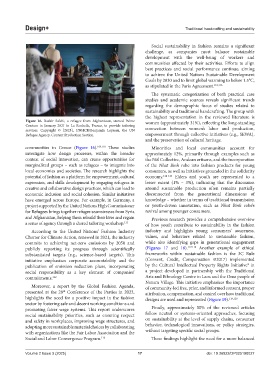
            Figure  16. Bashir Salehi, a refugee from Afghanistan, started Palme   women (approximately 31%), reflecting the long-standing
            Couture in January 2021 in La Rochelle, France, to provide tailoring   connection between women’s labor and production,
            services. Copyright © [2025], UNHCR/Benjamin Loyseau, the UN
            Refugee Agency, Content Production Section.        empowerment through collective initiatives (e.g., SEWA),
                                                               and the preservation of cultural heritage.
            communities in Greece (Figure  16). 109,110  These studies   Minorities and local communities account for
            investigate how design processes, within the broader   approximately 12%, primarily through examples such as
            context of social innovation, can create opportunities for   the Nöl Collective, Andean artisans, and the incorporation
            marginalized groups – such as refugees – to integrate into   of the  Nhat  Binh robe into fashion products for young
            local economies and societies. The research highlights the   consumers, as well as initiatives grounded in the solidarity
            potential of fashion as a platform for empowerment, cultural   economy. 114-116  Elders and youth are represented to a
            expression, and skills development by engaging refugees in   lesser  extent (1%  –  3%),  indicating  that the discussion
            creative and collaborative design practices, which can lead to   around sustainable production often remains partially
            economic inclusion and social cohesion. Similar initiatives   disconnected from the generational dimensions of
            have emerged across Europe. For example, in Germany, a   knowledge – whether in terms of traditional transmission
            project supported by the United Nations High Commissioner   or youth-driven innovation, such as  Nhat Binh robe’s
            for Refugees brings together refugee seamstresses from Syria   revival among younger consumers.
            and Afghanistan, helping them rebuild their lives and regain   Previous research provides a comprehensive overview
            a sense of agency through a shared tailoring workshop. 111  of how youth contribute to sustainability in the fashion

              According to the United  Nations’ Fashion Industry   industry and highlights young consumers’ awareness,
            Charter for Climate Action, renewed in 2021, the industry   values, and behaviors related to sustainable fashion,
            commits  to  achieving  net-zero  emissions  by  2050  and   while  also identifying  gaps in generational engagement
            publicly reporting its progress through scientifically   (Figures  17 and  18). 117,118  Another example of ethical
            substantiated targets (e.g., science-based targets). This   frameworks within sustainable fashion is the 3C Rule
            initiative emphasizes corporate accountability and the   (Consent, Credit, Compensation ©2017) implemented
            publication of emission reduction plans, incorporating   by the Cultural Intellectual Property Rights Initiative® in
            social responsibility as a key element of companies’   a project developed in partnership with the Traditional
            commitments. 112                                   Arts and Ethnology Centre in Laos and the Oma people of
                                                               Nanam Village. This initiative emphasizes the importance
              Moreover, a report by the Global Fashion Agenda,   of community-led free, prior, and informed consent, proper
            presented at the 28   Conference of the Parties in 2023,   attribution, compensation, and control over how traditional
                            th
            highlights the need for a positive impact in the fashion   designs are used and represented (Figure 19). 119,120
            sector by fostering safe and decent working conditions and
            promoting fairer wage systems. This report underscores   Finally,  approximately  50% of  the  reviewed  articles
            social sustainability priorities, such as ensuring respect   follow  neutral  or  systems-oriented  approaches,  focusing
            and safety in workplaces, improving wage structures, and   on sustainability at the level of supply chains, consumer
            adopting more sustainable material choices by collaborating   behavior,  technological  innovations,  or  policy  strategies,
            with organizations like the Fair Labor Association and the   without targeting specific social groups.
            Social and Labor Convergence Program. 113            These findings highlight the need for a more balanced


            Volume 2 Issue 3 (2025)                         17                           doi: 10.36922/DP025190027

