


Page 19 - DP-2-3
P. 19
Design+                                                             Traditional handcrafting and sustainability


                                                                             89
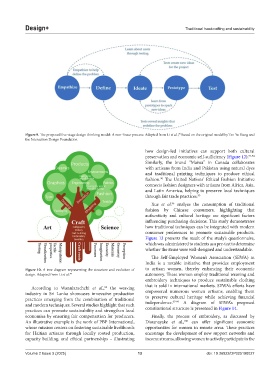
            Figure 9. The proposed five-stage design thinking model: A non-linear process. Adapted from Li et al.,  based on the original model by Teo Yu Siang and
            the Interaction Design Foundation.
                                                               how design-led initiatives can support both cultural
                                                               preservation and economic self-sufficiency (Figure 12). 93,94
                                                               Similarly, the brand “Maiwa” in Canada collaborates
                                                               with artisans from India and Pakistan using natural dyes
                                                               and traditional printing techniques to produce ethical
                                                               fashion.  The United  Nations’ Ethical Fashion Initiative
                                                                     90
                                                               connects fashion designers with artisans from Africa, Asia,
                                                               and Latin America, helping to preserve local techniques
                                                               through fair trade practices. 95
                                                                 Xue  et al.  analyze the consumption of traditional
                                                                          96
                                                               fashion by Chinese consumers, highlighting that
                                                               authenticity and cultural heritage are significant factors
                                                               influencing purchasing decisions. This study demonstrates
                                                               how traditional techniques can be integrated with modern
                                                               consumer  preferences  to  promote  sustainable  products.
                                                               Figure 13 presents the result of the study’s questionnaire,
                                                               which was administered to students as a pre-test to determine
                                                               whether the items were well-designed and understandable.

                                                                 The Self-Employed Women’s Association (SEWA) in
                                                               India is a notable initiative that provides employment
            Figure 10. A tree diagram representing the structure and evolution of   to artisan women, thereby enhancing their economic
            design. Adapted from Li et al. 89                  autonomy. These women employ traditional weaving and
                                                               embroidery techniques to produce sustainable clothing
              According to Wanniarachchi  et al.,  the weaving   that is sold in international markets. SEWA’s efforts have
                                             92
            industry in Sri Lanka showcases innovative production   empowered numerous women artisans, enabling them
            practices emerging from the combination of traditional   to preserve cultural heritage while achieving financial
                                                                           97-99
            and modern techniques. Several studies highlight that such   independence.   A diagram of SEWA’s proposed
            practices can promote sustainability and strengthen local   constitutional structure is presented in Figure 14.
            economies by ensuring fair compensation for producers.   Finally, the process of embroidery, as discussed by
            An illustrative example is the work of PBP International,   Dissanayake  et al.,  can offer significant economic
                                                                               100
            whose mission centers on fostering sustainable livelihoods   opportunities for women in remote areas. These practices
            for Haitian artisans through locally rooted production,   encourage the development of new support networks and
            capacity building, and ethical partnerships – illustrating   income streams, allowing women to actively participate in the


            Volume 2 Issue 3 (2025)                         13                           doi: 10.36922/DP025190027

