


Page 16 - DP-2-3
P. 16
Design+                                                             Traditional handcrafting and sustainability


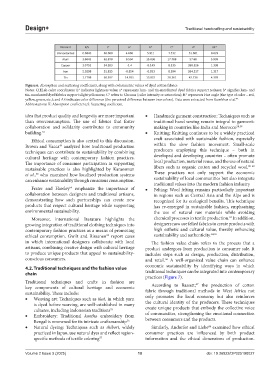
            Figure 6. Absorption and scattering coefficients, along with colorimetric values of dyed cotton fabrics
            Notes: CIELab color coordinates: L* indicates lightness value; a* represents lum- and tin-mordanted dyed fabrics support redness; b* signifies lum- and
            tin-mordanted dyed fabrics support slight yellowness; C* refers to Chroma (color intensity or saturation); H* represents Hue angle (the type of color – red,
            yellow, green, etc.); and ΔE indicates color difference (the perceived difference between two colors). Data were extracted from Kumbhar et al. 52
            Abbreviations: K: Absorption coefficient; S: Scattering coefficient.

            idea that product quality and longevity are more important   •   Handmade garment construction: Techniques such as
            than overconsumption. The use of fabrics that foster   traditional hand sewing remain integral to garment-
            collaboration  and  solidarity  contributes  to  community   making in countries like India and Morocco 58,59
            building. 53                                       •   Knitting: Knitting continues to be a widely practiced
              Ethical consumption is also central to this discussion.   craft associated with sustainable fashion, especially
                          49
            Brown and Vacca  analyzed how traditional production   within the slow fashion movement. Small-scale
            techniques can contribute to sustainability by combining   producers employing this technique – both in
            cultural  heritage with contemporary fashion practices.   developed and developing countries – often promote
            The importance of consumer participation in supporting   local production, material reuse, and the use of natural
                                                                                                           60-62
            sustainable practices is also highlighted by Karaosman   fibers such as organic cotton and recycled wool.
            et al.,  who examined how localized production systems   These practices not only support the economic
                50
            can enhance sustainability through conscious consumption.  sustainability of local communities but also integrate
                                                                  traditional values into the modern fashion industry
              Frater and Hawley  emphasize the importance of   •   Felting: Wool felting remains particularly important
                               54
            collaboration between designers and traditional artisans,   in regions such as Central Asia and the Alps and is
            demonstrating how such partnerships can create new    recognized for its ecological benefits. This technique
            products  that respect  cultural  heritage  while supporting   has  re-emerged  in  sustainable  fashion,  emphasizing
            environmental sustainability.                         the  use  of  natural  raw  materials  while  avoiding
                                                                                                   63
              Moreover, international literature highlights the   chemical processes in textile production.  In addition,
            growing integration of traditional clothing techniques into   designers now use felted fabrics to create products with
            contemporary fashion practices as a means of promoting   high  esthetic  and  cultural value, thereby  enhancing
            ethical consumption. Gwilt and Rissanen  report cases   sustainability and authenticity. 64,65
                                              25
            in which international designers collaborate with local   The fashion value chain refers to the process that a
            artisans, combining creative design with cultural heritage   product undergoes from production to consumer sale. It
            to produce unique products that appeal to sustainability-  includes steps such as design, production, distribution,
            conscious consumers.                               and retail.  A well-organized value chain can enhance
                                                                       66
            4.2. Traditional techniques and the fashion value   economic sustainability by identifying ways in which
            chain                                              traditional techniques can be integrated into contemporary
                                                               practices (Figure 7).
            Traditional techniques and crafts in fashion are                        67
            key components of cultural heritage and economic     According to Bassett,  the production of cotton
            sustainability. These include:                     fabric  through  traditional  methods  in  West  Africa  not
            •   Weaving art: Techniques such as ikat, in which yarn   only  promotes  the  local  economy  but  also  reinforces
               is dyed before weaving, are well-established in many   the cultural identity of the producers. These techniques
               cultures, including Indonesian traditions 55    create unique products that embody the collective voice
            •   Embroidery: Traditional  kantha embroidery from   of communities, strengthening the emotional connection
               Bengal is renowned for its intricate craftsmanship 56  between consumers and the products.
            •   Natural dyeing: Techniques such as  shibori, widely   Similarly, Andorfer and Liebe  examined how ethical
                                                                                          68
               practiced in Japan, use natural dyes and reflect region-  consumer  practices  are influenced  by both  product
               specific methods of textile coloring 57         information and the ethical dimensions of production.


            Volume 2 Issue 3 (2025)                         10                           doi: 10.36922/DP025190027

