


Page 21 - DP-2-3
P. 21
Design+                                                             Traditional handcrafting and sustainability


            Figure 12. Artisans and leatherworkers from Haiti.  Copyright © [2025],
                                            94
            Deux Mains.


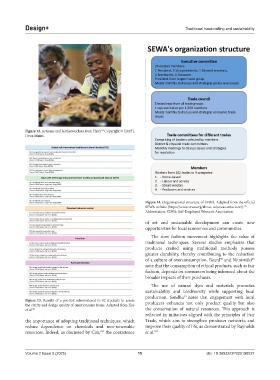
                                                               Figure 14. Organizational structure of SEWA. Adapted from the official
                                                               SEWA website (https://www.sewa.org/about-us/sewas-structure/). 99
                                                               Abbreviation: SEWA: Self-Employed Women’s Association.
                                                               of art and sustainable development can create new
                                                               opportunities for local economies and communities.
                                                                 The slow fashion movement highlights the value of
                                                               traditional techniques. Several studies emphasize that
                                                               products  crafted  using  traditional  methods  possess
                                                               greater  durability, thereby  contributing to  the reduction
                                                               of a culture of overconsumption. Beard  and Niinimäki
                                                                                               55
                                                                                                            66
                                                               note that the consumption of ethical products, such as fair
                                                               fashion, depends on consumers being informed about the
                                                               broader impacts of their purchases.
                                                                 The use of natural dyes and materials promotes
                                                               sustainability and biodiversity while supporting local
                                                               production. Sandhu notes that engagement with local
                                                                               91
            Figure  13.  Results  of  a  pre-test  administered  to  82  students  to  assess   producers  enhances  not  only  product  quality  but  also
            the clarity and design quality of questionnaire items. Adapted from Xue
            et al. 96                                          the  conservation  of  natural  resources.  This  approach  is
                                                               reflected in initiatives aligned with the principles of Fair
            the importance of adopting traditional techniques, which   Trade, which aim to strengthen producer networks and
            reduce dependence on chemicals and non-renewable   improve their quality of life, as demonstrated by Raynolds
            resources. Indeed, as discussed by Cox,  the coexistence   et al. 102
                                            101


            Volume 2 Issue 3 (2025)                         15                           doi: 10.36922/DP025190027

