


Page 81 - DP-2-3
P. 81
Design+                                         Evaluation of recreational suitability of urban waterfront green spaces


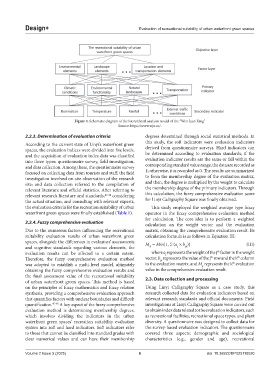
                                 Figure 4. Schematic diagram of the hierarchical analysis model of the “Wen Juan Xing”
                                                   Source: https://www.wjx.cn/.
            2.2.3. Determination of evaluation criteria        degrees determined through social statistical methods. In

            According to the current state of Linyi’s waterfront green   this study, the soft indicators were evaluation indicators
            spaces, the evaluation indices were divided into five levels,   derived from questionnaire surveys. Hard indicators can
            and the acquisition of evaluation index data was classified   be determined according to evaluation standards; if the
            into three types: questionnaire survey, field investigation,   evaluation indicator results are the same or fall within the
            and data collection. Among these, the questionnaire survey   corresponding standard value range, the data are recorded as
            focused on collecting data from tourists and staff; the field   1; otherwise, it is recorded as 0. The results are summarized
            investigation involved on-site observation of the research   to form the membership degree of the evaluation matrix,
            site; and data collection referred to the compilation of   and then, the degree is multiplied by the weight to calculate
            relevant literature and official statistics. After referring to   the membership degree of the primary indicators. Through
            relevant research literature and standards, 42-44  considering   this calculation, the fuzzy comprehensive evaluation score
            the actual situation, and consulting with relevant experts,   for Linyi Calligraphy Square was finally obtained.
            the evaluation criteria for the recreation suitability of urban   This study employed the weighted average type fuzzy
            waterfront green spaces were finally established (Table 1).  operator in the fuzzy comprehensive evaluation method
                                                               for calculation. The core idea is to perform a weighted
            2.2.4. Fuzzy comprehensive evaluation              calculation  on  the  weight  vector  and  the  evaluation
            Due to the numerous factors influencing the recreational   matrix, obtaining the comprehensive evaluation result. Its
            suitability evaluation results of urban waterfront green   calculation formula is as follows in Equation III:
            spaces, alongside the differences in evaluators’ assessments   M  = Min{1, ∑ (a × b )}        (III)
            and cognitive standards regarding various elements, the   K     j   jk
                                                                                             th
            evaluation results can be affected to a certain extent.   where a represents the weight of the j  factor in the weight
                                                                       j
                                                                                                      th
                                                                                           th
            Therefore,  the  fuzzy  comprehensive  evaluation  method   vector, b  represents the value of the j  row and the k  column
                                                                     jk
                                                                                                    th
            was  adopted  to  establish  a  multi-level  model,  ultimately   in the evaluation matrix, and M  represents the k  evaluation
                                                                                       k
            obtaining the fuzzy comprehensive evaluation results and   value in the comprehensive evaluation result.
            the final assessment value of the recreational suitability   2.3. Data collection and processing
            of urban waterfront green spaces. This method is based
            on the principles of fuzzy mathematics and fuzzy relation   Using Linyi Calligraphy Square as a case study, this
            synthesis, providing a comprehensive evaluation approach   research collected data for evaluation indicators based on
            that quantifies factors with unclear boundaries and difficult   relevant research standards and official documents. Field
            quantification. 45-48  A key aspect of the fuzzy comprehensive   investigations at Linyi Calligraphy Square were carried out
            evaluation  method  is  determining  membership  degrees,   to obtain index data related to the evaluation indicators, such
            which  involves  dividing  the  indicators  in  the  urban   as recreational facilities, recreational space types, and plant
            waterfront  green  spaces’  recreation  suitability  evaluation   diversity. A questionnaire was designed to collect data for
            system into soft and hard indicators. Soft indicators refer   the survey-based evaluation indicators. The questionnaire
            to those that cannot be classified into standard grades with   covered three aspects: demographic and sociological
            clear numerical values and can have their membership   characteristics (e.g., gender and age), recreational


            Volume 2 Issue 3 (2025)                         6                            doi: 10.36922/DP025110020

