


Page 96 - EER-2-3
P. 96
Explora: Environment
            and Resource                                    Comparative analysis of THMs and THAAs in water distribution media


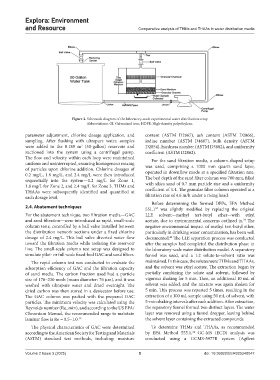
                                Figure 2. Schematic diagram of the laboratory-scale experimental water distribution setup
                                      Abbreviations: GI: Galvanized iron; HDPE: High-density polyethylene.

            parameter adjustment, chlorine dosage application, and   content (ASTM D2867), ash content (ASTM D2866),
            sampling. After flushing with ultrapure water, samples   iodine number (ASTM D4607), bulk density (ASTM
                                    3
            were added to the 0.189 m   (50-gallon) reservoir and   D2854), hardness number (ASTM D3802), and uniformity
            suctioned  into the system using a centrifugal pump.   coefficient (ASTM D2862).
            The flow and velocity within each loop were maintained   For the sand filtration media, a column-shaped setup
            uniform and uninterrupted, ensuring homogenous mixing   was used, comprising a 1000  mm quartz sand layer,
            of particles upon chlorine addition. Chlorine dosages of   operated in downflow mode at a specified filtration rate.
            0.2 mg/L, 1.8 mg/L, and 2.4 mg/L were then introduced   The bed depth of the sand filter column was 700 mm, filled
            sequentially into the system—0.2  mg/L for Zone 1,
            1.8 mg/L for Zone 2, and 2.4 mg/L for Zone 3. THMs and   with silica sand of 0.7 mm particle size and a uniformity
            THAAs  were  subsequently identified and  quantified at   coefficient of 1.4. The granular filter column operated at a
            each dosage level.                                 filtration rate of 4.6 m/h under a rising head.
                                                                 Before determining the formed DBPs, EPA Method
            2.4. Abatement techniques                          551.1  was slightly modified by replacing the original
                                                                   34
            For the abatement technique, two filtration media—GAC   LLE  solvent—methyl  tert-butyl  ether—with  ethyl
            and sand filtration—were introduced as rapid, small-scale   acetate, due to environmental concerns outlined in.  The
                                                                                                         34
            column tests, controlled by a ball valve installed between   negative environmental impact of methyl tert-butyl ether,
            the distribution network sections under a fixed chlorine   particularly in drinking water contamination, has been well
            dosage of 2.4  mg/L. This ball valve diverted water flow   documented.  The LLE separation process was conducted
                                                                         40
            toward the filtration media while isolating the reservoir   after the samples had completed the distribution phase in
            line.  The small-scale  column  test setup was  designed  to   the laboratory-scale water distribution model. A separatory
            simulate pilot- or full-scale fixed-bed GAC and sand filters.  funnel was used, and a 1:2 solute-to-solvent ratio was
              The rapid column test was conducted to evaluate the   maintained. In this case, the solutes were THMs and THAAs,
            adsorption efficiency of GAC and the filtration capacity   and the solvent was ethyl acetate. The extraction began by
            of sand media. The carbon fraction used had a particle   partially combining the solute and solvent, followed by
            size of 170–230 mesh (mean diameter: 76 µm), and it was   vigorous shaking for 5 min. Then, an additional 10 mL of
            washed with ultrapure water and dried overnight. The   solvent was added, and the mixture was again shaken for
            dried carbon was then stored in a desiccator before use.   5 min. This process was repeated 5 times, resulting in the
            The GAC column was packed with the prepared GAC    extraction of a 100 mL sample using 50 mL of solvent, with
            particles. The minimum velocity was calculated using the   5-min shaking intervals after each addition. After extraction,
            Reynolds number (Re_min), and according to the US EPA/  the separatory funnel formed two distinct layers. The water
            Chromium Manual, the recommended range to maintain   layer was removed using a funnel dropper, leaving behind
            laminar flow is Re = 0.5–1.0. 39                   the solvent layer containing the extracted compounds.
              The physical characteristics of GAC were determined   To  determine  THMs  and  THAAs,  as recommended
                                                                                   34
            according to the American Society for Testing and Materials   by EPA Method 555.1,  GC-MS (ECD) analysis was
            (ASTM) standard test methods, including:  moisture   conducted  using  a  GCMS-5977B  system  (Agilent

            Volume 2 Issue 3 (2025)                         5                           doi: 10.36922/EER025240047

