


Page 90 - ESAM-1-2
P. 90
Engineering Science in
            Additive Manufacturing                                            Porous structure performance improvement


                                                                A                     B


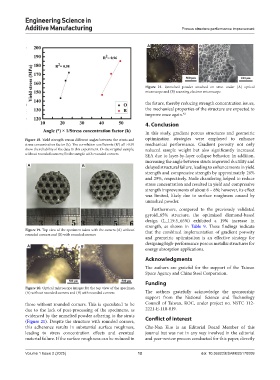
                                                               Figure  21. Unmelted powder attached on strut under (A) optical
                                                               microscope and (B) scanning electron microscope

                                                               the future, thereby reducing strength concentration issues,
                                                               the mechanical properties of the structure are expected to
                                                               improve once again. 42
                                                               4. Conclusion
                                                               In this study, gradient porous structures and geometric
            Figure 18. Yield strength versus different angles between the struts and   optimization strategies were employed to enhance
                                                   2
            stress concentration factor (k). The correlation coefficients (R ) all >0.95   mechanical performance. Gradient porosity not only
            show the reliability of the data in this experiment. O=the original sample,   reduced sample  weight  but also significantly increased
            without rounded corners; R=the sample with rounded corners.  SEA due to layer-by-layer collapse behavior. In addition,
                                                               increasing the angle between struts improved ductility and
             A                      B                          delayed structural failure, leading to enhancements in yield
                                                               strength and compressive strength by approximately 26%
                                                               and 29%, respectively. Node chamfering helped to reduce
                                                               stress concentration and resulted in yield and compressive
                                                               strength improvements of about 6 – 8%; however, its effect
                                                               was limited, likely due to surface roughness caused by
                                                               unmelted powder.
                                                                 Furthermore, compared to the previously validated
                                                               gyroid_65% structure, the optimized diamond-based
                                                               design (L_119.5_65%) exhibited a 19% increase in
                                                               strength, as shown in  Table 9. These findings indicate
            Figure 19. Top view of the specimen taken with the camera (A) without   that the combined implementation of gradient porosity
            rounded corners and (B) with rounded corners
                                                               and geometric optimization is an effective strategy for
                                                               designing high-performance porous metallic structures for
             A                     B
                                                               energy absorption applications.
                                                               Acknowledgments
                                                               The  authors  are  grateful  for  the  support  of  the  Taiwan
                                                               Space Agency and China Steel Corporation.
                                                               Funding
            Figure 20. Optical microscope images for the top view of the specimen
            (A) without rounded corners and (B) with rounded corners  The authors gratefully acknowledge the sponsorship
                                                               support from the National Science and Technology
            those without rounded corners. This is speculated to be   Council of Taiwan, ROC, under project no. NSTC 112-
            due to the lack of post-processing of the specimens, as   2221-E-110-019.
            evidenced by the unmelted powder adhering to the struts
            (Figure 21). Despite the structure with rounded corners,   Conflict of interest
            this adherence results in substantial surface roughness,   Che-Nan Kuo is an Editorial Board Member of this
            leading to stress concentration effects and eventual   journal but was not in any way involved in the editorial
            material failure. If the surface roughness can be reduced in   and peer-review process conducted for this paper, directly


            Volume 1 Issue 2 (2025)                         12                         doi: 10.36922/ESAM025170009

