


Page 87 - ESAM-1-2
P. 87
Engineering Science in
            Additive Manufacturing                                            Porous structure performance improvement


            Table 7. Buckling vectors calculation of different angles between the struts buckling
            Angle (°)      θ (°)       sinθ       cosθ        Buckling vector    Normal vector     Lateral vector
            99.5            9.5       0.165       0.986          0.165F             0.027F            0.163F
            109.5          19.5       0.334       0.943          0.334F             0.112F            0.315F
            119.5          29.5       0.492       0.870          0.492F             0.242F            0.428F
            Note: Vector can be separated by normal vector and lateral vector.

                         A                                     B


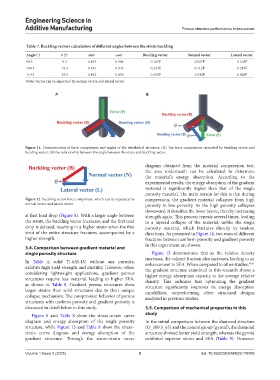
            Figure 11. Demonstration of force components and angles of the tetrahedral structure. (A) The force components separated by buckling vector and
            bending vector; (B) the relationship between the angle between the struts and buckling vector.

                                                               diagram  obtained from  the  material  compression  test,
                                                               the area underneath can be calculated to determine
                                                               the  material’s  energy absorption. According to  the
                                                               experimental results, the energy absorption of the gradient
                                                               material is significantly higher than that of the single
                                                               porosity material. The main reason for this is that during
            Figure 12. Buckling vector force component, which can be separated by   compression, the gradient material collapses from high
            normal vector and lateral vector                   porosity to low porosity. As the high porosity collapses
                                                               downward, it densifies the lower layers, thereby increasing
            at first load drop (Figure 8). With a larger angle between   strength again. This process repeats several times, leading
            the struts, the buckling vector increases, and the first load   to a layered collapse of the material, unlike the single
            drop is delayed, resulting in a higher strain when the first   porosity material, which fractures directly in random
            strut of the entire structure fractures, accompanied by a   directions. As presented in Figure 14, two ways of different
            higher strength.                                   fractures between uniform porosity and gradient porosity
                                                               in this experiment are shown.
            3.4. Comparison between gradient material and
            single porosity structure                            Figure  15 demonstrates that as the relative density
                                                               increases, the volume fraction also increases, leading to an
            In  Table 4, solid Ti-6Al-4V, without any porosity,   enhancement in SEA. When compared to other studies, 40,41
            exhibits high yield strength and ductility. However, when   the gradient structure examined in this research shows a
            considering lightweight applications, gradient porous   higher energy absorption capacity at the average relative
            structures require less material, leading to higher SEA,   density. This indicates that optimizing the gradient
            as shown in  Table 8. Gradient porous structures show   structure significantly improves its energy absorption
            larger strains than solid structures due to their unique   capabilities, outperforming other structural designs
            collapse mechanism. The compression behavior of porous   analyzed in previous studies.
            structures with uniform porosity and gradient porosity is
            discussed in detail below in this study.           3.5. Comparison of mechanical properties in this
              Figure  6 and  Table 8 show the stress–strain curve   study
            diagram  and  energy  absorption  of  the  single  porosity   In the initial comparison between the diamond structure
            structure, while  Figure  13 and  Table 8 show the stress–  (O_109.5_65) and the control group (gyroid), the diamond
            strain curve  diagram and energy absorption of the   structure showed better yield strength, whereas the gyroid
            gradient structure. Through the stress–strain curve   exhibited superior strain and SEA (Table 9). However,


            Volume 1 Issue 2 (2025)                         9                          doi: 10.36922/ESAM025170009

