


Page 85 - ESAM-1-2
P. 85
Engineering Science in
            Additive Manufacturing                                            Porous structure performance improvement


            Table 4. Mechanical properties of uniform‑porosity structure fabricated by selective laser melting in this study
            Specimen   Yield strength (MPa)  Compressive strength (MPa)  Strain at first load drop (%)  Strain at failure (%)  SEA (J/g)
            Ti64_solid*    1213±102            1419±90                 20.5               20.5         62.50
            Ti64_solid    1309.67±28.11       1658.38±6.23           20.10±2.25         20.10±2.25   66.16±0.59
            O_99.5_65     143.32±0.98         177.88±2.25            4.40±0.14          4.86±0.45     5.01±0.22
            O_109.5_65    163.07±1.52         196.01±1.20            4.52±0.08          5.36±0.13     5.45±0.36
            O_119.5_65    172.10±0.46         224.67±0.68            5.05±0.21          5.91±0.28     6.10±0.29
            R_99.5_65     147.07±1.20         183.56±2.15            4.58±0.04          5.32±0.32     5.49±0.32
            R_109.5_65    170.80±0.63         206.71±1.16            4.65±0.13          5.54±0.31     6.04±0.15
            R_119.5_65    185.10±2.03         237.30±0.21            5.15±0.19          6.35±0.21     6.61±0.26
            Note: *Mechanical properties of Ti64_solid are derived from another study,  for the purpose compared with the Ti64_solid printed in our laboratory.
                                                            39
            Abbreviation: SEA: Specific energy absorption.
            Table 5. Maximum strength on the node in single‑porosity   A          B
            material

            Specimen  d (mm)  ρ (mm)  k   σ (MPa)  σ   (MPa)
                                                   max
            O_99.5_65  0.71±0.01  0.16±0.01  5.21  F  5.21F
            O_109.5_65 0.70±0.04  0.17±0.01  5.06  F  5.06F
            O_119.5_65 0.68±0.06  0.16±0.03  5.12  F  5.12F
            R_99.5_65  0.65±0.03  1.21±0.08  2.47  F  2.47F
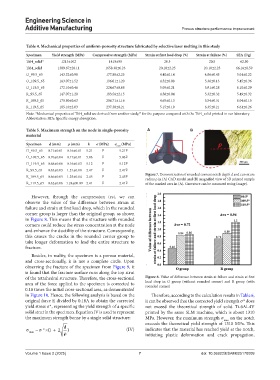
                                                               Figure 7. Demonstration of rounded corners notch depth d and curvature
            R_109.5_65  0.66±0.05  1.25±0.04  2.45  F  2.45F
                                                               radius ρ in (A) CAD model and (B) magnified view of 3D printed sample
            R_119.5_65  0.62±0.06 1.24±00.09 2.41  F  2.41F    of the marked area in (A). Curvature can be measured using ImageJ.

              However,  through the  compression  test, we  can
            observe the value of the difference between strain at
            failure and strain at first load drop, which in the rounded
            corner group is larger than the original group, as shown
            in Figure 8. This means that the structure with rounded
            corners could reduce the stress concentration at the node
            and enhance the ductility of the structure. Consequently,
            this  causes  the  cracks  in  the  rounded  corner  group  to
            take longer deformation to lead the entire structure to
            fracture.
              Besides, in reality, the specimen is a porous material,
            and cross-sectionally, it is not a complete circle. Upon
            observing the fracture of the specimen from Figure 9, it
            is found that the fracture surface runs along the top strut
            of the tetrahedral structure. Therefore, the cross-sectional   Figure 8. Value of difference between strain at failure and strain at first
            area of the force applied to the specimen is corrected to   load drop in O group (without rounded corner) and R group (with
                                                               rounded corner)
            0.18 times the initial cross-sectional area, as demonstrated
            in Figure 10. Hence, the following analysis is based on the   Therefore, according to the calculation results in Table 6,
            original force F, divided by 0.18A to obtain the corrected   it can be observed that the corrected yield strength * does
            yield stress *, representing the yield strength of a specific   not exceed the theoretical strength of solid Ti-6Al-4V
            solid strut in the specimen. Equation IV is used to represent   printed by the same SLM machine, which is about 1310
            the maximum strength borne by a single solid structure:  MPa. However, the maximum strength  max  on the notch
                                                               exceeds the theoretical yield strength of 1310 MPa. This
                            d
            σ max  = σ ×*( 1   2+  ρ  )                (IV)    indicates that the material has reached yield at the notch,
                                                               initiating plastic deformation and crack propagation,


            Volume 1 Issue 2 (2025)                         7                          doi: 10.36922/ESAM025170009

