


Page 83 - ESAM-1-2
P. 83
Engineering Science in
            Additive Manufacturing                                            Porous structure performance improvement


            rounded, representing structures with rounded corners.   to provide environmental protection, preventing reactions
            The numerical values, such as 99.5/109.5/119.5 denote   between the samples and oxygen during fabrication.
            different  structural angles. In  addition,  “65” indicates   To ensure that the porosity of the printed sample is
            uniform  porosity at  65%, and “G” is used for gradient   the same as the designed CAD model, the density and the
            porosity, 55% – 60% – 65% – 70% – 75%.
                                                               weight of the printed sample need to be calculated. Using
              The specimens used in this experiment were all printed   Equation III, the porosity can be calculated:
            using the SolidMEN AM300 printer from the Industrial
            Technology Research Institute. To minimize powder waste   ρ = (1 −  V  × ) 100 %              (III)
            and save time, a resource-based view restriction module   V 0
            was added to the machine, limiting the size of the build   where ρ is the material porosity, V is the material real
            platform to 120 mm × 120 mm. This equipment utilizes
            SLM technology, and the scanning parameters are set   volume, and V  is the volume of a cylinder. The primary
                                                                           0
            according to Table 2. The chamfer was filled with argon gas   objective of compression testing is to determine the
                                                               material’s behavior and mechanical properties under
                                                               compression by measuring fundamental variables such
                                                               as strength and deformation. The compression test would
                                                               be conducted with an Instron 5582 Universal testing
                                                               machine (Instron, United States) at an initial strain
                                                               rate of 1×10  (s ). To ensure the strain accurately from
                                                                            −1
                                                                         −4
                                                               the specimen, a linear variable differential transformer
                                                               was externally attached at room temperature. During
                                                               compression testing, the test specimen was placed between
                                                               two platens, and compression was applied using a crosshead
                                                               to control displacement. Typically, the specimen would be
                                                               shortening  along  the compression force  direction while
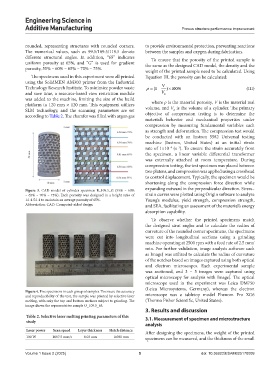
            Figure  3. CAD model of cylinder specimen R_109.5_G (55% – 60%   expanding outward in the perpendicular direction. Stress–
            – 65% – 70% – 75%). Each porosity was designed in a height ratio of   strain curves were plotted using Origin software to analyze
            1:1:1.5:1:1 to maintain an average porosity of 65%.  Young’s modulus, yield strength, compression strength,
            Abbreviation: CAD: Computed-aided design.          and SEA, facilitating an assessment of the material’s energy
                                                               absorption capability.

                                                                 To observe whether the printed specimens match
                                                               the designed strut angles and to calculate the radius of
                                                               curvature of the rounded corner specimens, the specimens
                                                               were cut into longitudinal sections using a grinding
                                                               machine operating at 2500 rpm with a feed rate of 2.5 mm/
                                                               min. For further validation, image analysis software such
                                                               as ImageJ was utilized to calculate the radius of curvature
                                                               of the notches based on images captured using both optical
                                                               and electron microscopes. Each experimental sample
                                                               was sectioned, and 3 – 5 images were captured using
                                                               optical microscopy for analysis with ImageJ. The optical
                                                               microscope used in the experiment was Leica DM750
                                                               (Leica Microsystems, Germany), whereas the electron
            Figure 4. Five specimens in each group of samples. To ensure the accuracy
            and reproducibility of the test, the sample was printed by selective laser   microscope was a  tabletop model Phenom Pro XG6
            melting, with only the top and bottom surfaces subject to grinding. The   (Thermo Fisher Scientific, United States).
            image shows the representative sample O_109.5_65.
                                                               3. Results and discussion
            Table 2. Selective laser melting printing parameters of this
            study                                              3.1. Measurement of specimen and microstructure
                                                               analysis
            Laser power  Scan speed  Layer thickness  Hatch distance  After designing the specimens, the weight of the printed
            100 W      1087.5 mm/s   0.03 mm     0.081 mm      specimens can be measured, and the thickness of the small


            Volume 1 Issue 2 (2025)                         5                          doi: 10.36922/ESAM025170009

