


Page 32 - ESAM-1-4
P. 32
Engineering Science in
            Additive Manufacturing                                              Machine learning for biomedical metal AM


              Regarding phase composition and morphology       load-bearing implants where modulus matching with
            prediction, Zhang  et al.  synthesized 144 sets of Ti–  bone tissue is crucial to prevent stress shielding. ML
                                78
            xAl–yV alloy samples through DED and utilized a    surrogate models enable predictive mechanical property
            backpropagation neural network to  establish  a mapping   design by establishing direct correlations between process
            from  composition  to  microstructure  and  mechanical   parameters,  heat  treatment  conditions,  and  resulting
            properties. The models successfully predicted the volume   mechanical performance.
            fraction of  α-phase and the average width of  α-laths,   In a study on DED titanium alloys, Chi et al.  employed
                                                                                                    80
            achieving high prediction accuracy with R² values   an XGBoost model to establish relationships between
            exceeding 0.96. This direct composition–microstructure
            mapping provides a powerful high-throughput screening   process parameters, utilizing laser power, scanning rate,
            tool for rapidly designing novel biomedical titanium   and heat treatment conditions as inputs to accurately
            alloys with tailored microstructures, such as low-modulus   predict the ultimate tensile strength (UTS) and elongation
            β-Ti alloys. Furthermore, unsupervised deep learning   of the material. Ti-17 alloy specimens fabricated under the
            has revolutionized microstructure characterization.   guidance of the model exhibited mechanical properties
            Calvat  et  al.  employed variational autoencoders for   in close agreement with the predicted values, achieving a
                       79
            low-dimensional feature extraction from raw electron   UTS of 1050 MPa and an elongation of 12.5%. Considering
            backscatter diffraction Kikuchi diffraction patterns   the multifactorial effects of process–heat treatment–
                                                                                              81
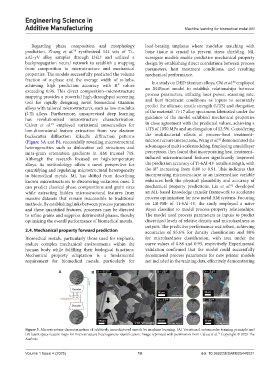
            (Figure 5A and B), successfully revealing microstructural   microstructure interactions, Wang et al.  demonstrated the
            heterogeneities such as dislocation cell structures and   advantages of multi-scale modeling. Employing a multilayer
            intra-grain orientation gradients in AM Inconel 718.   perceptron, they found that incorporating heat treatment–
            Although the research focused on high-temperature   induced  microstructural features  significantly improved
            alloys, its methodology offers a novel perspective for   the prediction accuracy of Ti-6Al-4V tensile strength, with
            quantifying and regulating microstructural heterogeneity   the R² increasing from 0.80 to 0.91. This indicates that
            in biomedical metals. ML has shifted from describing   incorporating microstructure as an intermediate variable
            known microstructures to discovering unknown ones. It   enhances  both  the  physical  plausibility  and  accuracy  of
                                                                                                   82
            can predict classical phase compositions and grain sizes   mechanical property predictions.  Liu  et al.  developed
            while extracting hidden microstructural features from   an ML-based knowledge transfer framework to accelerate
            massive  datasets  that  remain inaccessible to  traditional   process optimization for new metal AM systems. Focusing
            methods. By establishing links between process parameters   on LB-PBF of Ti-6Al-4V, the study employed a naïve
            and these quantified features, processes may be directed   Bayes classifier to model process-property relationships.
            to refine grains and suppress detrimental phases, thereby   The model used process parameters as inputs to predict
            optimizing the overall performance of biomedical metals.  discretized levels of relative density and microhardness as
                                                               outputs. The predictive performance was robust, achieving
            2.4. Mechanical property forward prediction        accuracies of 85.6% for density classification and 88%
            Biomedical metals, particularly  those  used  for  implants,   for microhardness classification, with area under the
            endure  complex  mechanical  environments  within  the   curve values of 0.88 and 0.93, respectively. Experimental
            human body while fulfilling their biological functions.   validation confirmed that  the model  could  successfully
            Mechanical property adaptation is a fundamental    recommend process parameters for new printer models
            requirement for biomedical metals, particularly for   not included in the training data, effectively demonstrating


                          A             B


            Figure 5. Microstructure characterization of additively manufactured metals by machine learning. (A) Variational autoencoder training principle and
            (B) latent space feature maps for microstructure heterogeneity identification. Image reprinted with permission from Calvat et al.  Copyright © 2025 The
                                                                                              79
            Authors.

            Volume 1 Issue 4 (2025)                         10                         doi: 10.36922/ESAM025440031

