


Page 34 - ESAM-1-4
P. 34
Engineering Science in
            Additive Manufacturing                                              Machine learning for biomedical metal AM


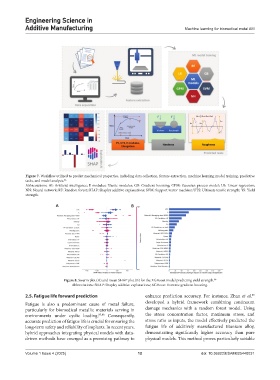
            Figure 7. Workflow utilized to predict mechanical properties, including data collection, feature extraction, machine learning model training, predictive
            tasks, and model analysis. 86
            Abbreviations: AI: Artificial intelligence; E modulus: Elastic modulus; GB: Gradient boosting; GPM: Gaussian process model; LR: Linear regression;
            NN: Neural network; RF: Random forest; SHAP: Shapley additive explanations; SVM: Support vector machine; UTS: Ultimate tensile strength; YS: Yield
            strength.

                         A                               B


                            Figure 8. Swarm plot (A) and mean SHAP plot (B) for the XGBoost model predicting yield strength. 86
                                Abbreviations: SHAP: Shapley additive explanations; XGBoost: Extreme gradient boosting.

            2.5. Fatigue life forward prediction               enhance  prediction  accuracy.  For  instance,  Zhan  et al.
                                                                                                            89
            Fatigue is also a predominant cause of metal failure,   developed  a  hybrid  framework  combining  continuum
            particularly for biomedical metallic materials serving in   damage mechanics with a random forest model. Using
            environments  under  cyclic  loading. 87,88   Consequently,   the stress concentration factor, maximum stress, and
            accurate prediction of fatigue life is crucial for ensuring the   stress ratio as inputs, the model effectively predicted the
            long-term safety and reliability of implants. In recent years,   fatigue life of additively manufactured titanium alloy,
            hybrid approaches integrating physical models with data-  demonstrating significantly higher accuracy than pure
            driven methods have emerged as a promising pathway to   physical models. This method proves particularly suitable


            Volume 1 Issue 4 (2025)                         12                         doi: 10.36922/ESAM025440031

