


Page 37 - ESAM-1-4
P. 37
Engineering Science in
            Additive Manufacturing                                              Machine learning for biomedical metal AM


                                                               bone  modulus,   single-objective  inverse  optimization
                                                                            111
                                                               provides efficient solutions by identifying process
                                                               parameters that achieve those targets. The core of the ML
                                                               implementation path is to construct an inverse search
                                                               framework driven by the performance target. This involves
                                                               first training a high-accuracy forward surrogate model that
                                                               maps process parameters to the target performance. Then,
                                                               with  the  goal  of  making  the  model’s  predicted  value  as
                                                               close as possible to the desired performance, optimization
                                                               algorithms are used to perform a global search within the
                                                               process parameter space, inversely deriving the optimal
                                                               combination of process parameters.
                                                                              112
                                                                 Narayana  et al.  explicitly aimed to determine the
                                                               optimal process parameters for achieving extremely high
                                                               density and a specific build height for Ti-6Al-4V in DED.
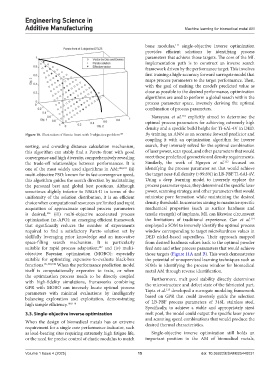
            Figure 10. Illustration of Pareto front with 3-objective problem 103  By training an ANN as an accurate forward predictor and
                                                               coupling it with an optimization algorithm for inverse
            sorting, and crowding distance calculation mechanism,   search, they inversely solved for the optimal combination
            this algorithm can stably find a Pareto front with good   of laser power, scan speed, and other parameters that would
            convergence and high diversity, comprehensively revealing   meet these predefined geometric and density requirements.
                                                                                                 113
            the trade-off relationships between performances. It is   Similarly, the work of Nguyen  et al.  focused on
            one of the most widely used algorithms in AM; 104,105  (ii)   identifying the process parameter set that would achieve
            multi-objective PSO: known for its fast convergence speed,   the target near-full density (>99.8%) in LB-PBF Ti-6Al-4V.
            this algorithm guides the search direction by maintaining   Using a deep learning model to inversely explore the
            the  personal  best  and  global  best  positions.  Although   process parameter space, they determined the specific laser
            sometimes slightly inferior to NSGA-II in terms of the   power, scanning strategy, and other parameters that would
            uniformity of the solution distribution, it is an efficient   minimize  pore  formation  while maintaining  the  desired
            choice when computational resources are limited and rapid   density threshold. In scenarios aiming to maximize specific
            acquisition of approximate optimal process parameters   mechanical properties (such as surface hardness and
            is desired;  (iii)  multi-objective  accelerated process   tensile strength) of implants, ML can likewise circumvent
                     106
            optimization (m-APO): an emerging efficient framework   the limitations of traditional experience. Gan  et al.
                                                                                                            114
            that significantly reduces the number of experiments   employed a SOM to inversely identify the optimal process
            required to find a satisfactory Pareto solution set by   window corresponding to target microhardness values in
            skillfully leveraging prior knowledge and an innovative   DED nickel-based superalloys. Their approach mapped
            space-filling search mechanism. It is particularly   from desired hardness values back to the optimal powder
            suitable for rapid process adaptation;  and (iv) multi-  feed rate and other process parameters that would achieve
                                           107
            objective Bayesian optimization (MOBO): especially   those targets (Figure 11A and B). This work demonstrates
            suitable for optimizing expensive-to-evaluate black-box   the potential of unsupervised learning techniques such as
            functions. 95,100,108  When the performance prediction model   SOMs in identifying the process window for biomedical
            itself is computationally expensive to train, or when   metal AM through reverse identification.
            the optimization process needs to be directly coupled   Furthermore, melt pool stability directly determines
            with high-fidelity simulations, frameworks combining
            GPR with MOBO can inversely locate optimal process   the microstructure and defect state of the fabricated part.
                                                                        115
            parameters with minimal evaluations by intelligently   Tapia et al.  developed a surrogate modeling framework
            balancing exploration and exploitation, demonstrating   based on GPR that could inversely guide the selection
            high sample efficiency. 109,110                    of  LB-PBF  process  parameters  of  316L  stainless  steel.
                                                               Specifically, to achieve a stable and appropriately sized
            3.3. Single-objective inverse optimization         melt pool, the model could output the specific laser power
                                                               and scanning speed combinations that would produce the
            When the design of biomedical metals has an extreme
            requirement for a single core performance indicator, such   desired thermal characteristics.
            as load-bearing sites requiring extremely high fatigue life,   Single-objective inverse optimization still holds an
            or the need for precise control of elastic modulus to match   important  position  in  the  AM  of  biomedical  metals,


            Volume 1 Issue 4 (2025)                         15                         doi: 10.36922/ESAM025440031

