


Page 39 - ESAM-1-4
P. 39
Engineering Science in
            Additive Manufacturing                                              Machine learning for biomedical metal AM


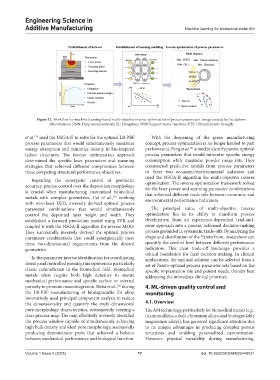
                 Figure 12. Workflow for machine learning-based multi-objective inverse optimization of process parameters. Image created by the authors.
                      Abbreviations: DNN: Deep neural network; EL: Elongation; SVM: Support vector machine; UTS: Ultimate tensile strength.


            et al.  used the NSGA-II to solve for the optimal LB-PBF   With the deepening of the green manufacturing
                118
            process parameters that would simultaneously maximize   concept, process optimization is no longer limited to part
            energy absorption and minimize density in bio-inspired   performance. Peng et al.  aimed to identify pareto-optimal
                                                                                  121
            lattice structures. The inverse optimization approach   process parameters that would minimize specific energy
            determined the specific laser parameters and scanning   consumption while  maximize  powder  usage  rate.  They
            strategies that achieved different compromises between   constructed predictive models from process parameters
            these competing structural performance objectives.  to these two economic/environmental indicator and
                                                               used the NSGA-II algorithm for multi-objective inverse
              Regarding  the  synergistic  control  of  geometric   optimization. The inverse optimization framework solved
            accuracy, precise control over the deposition morphology   for the laser power and scanning parameter combinations
            is  crucial  when  manufacturing  customized  biomedical   that achieved different trade-offs between economic and
            metals with complex geometries. Cai  et al.,  working   environmental performance indicators.
                                                 119
            with wire-laser DED, inversely derived optimal process
            parameter combinations that would simultaneously     The principal value of multi-objective inverse
            control the deposited layer height and width. They   optimization lies in its ability to transform process
            established a forward prediction model using SVR and   development from an experience-dependent trial-and-
            coupled it with the NSGA-II algorithm for inverse MOO.   error approach into a precise, informed decision-making
            They successfully inversely derived the optimal process   process grounded in systematic trade-offs. By analyzing the
            parameter combinations that could synergistically meet   shape and distribution of the Pareto front, researchers can
            these  two-dimensional  requirements  from  the  desired   quantify the conflict level between different performance
            geometries.                                        indicators. This clear trade-off landscape provides a
                                                               critical foundation for final decision-making. In clinical
              In the parameter inverse identification for coordinating   applications, the optimal solution can be selected from a
            density and controlled porosity, this represents a particularly   set of Pareto-optimal process parameter sets based on the
            classic contradiction in the biomedical field. Biomedical   specific implantation site and patient needs, thereby best
            metals  often  require  both  high  densities  to  ensure   addressing the immediate clinical priorities.
            mechanical performance and specific surface or internal
            porosity to promote osseointegration. Heiss et al.,  during   4. ML-driven quality control and
                                                   120
            the LB-PBF manufacturing of biodegradable Zn alloy,   monitoring
            innovatively used principal component analysis to reduce
            the dimensionality and quantify the multi-dimensional   4.1. Overview
            pore morphology characteristics, subsequently creating a   The AM technology, particularly for biomedical metals (e.g.,
            clear process map. The map effectively inversely identified   titanium alloys, cobalt-chromium alloys, and biodegradable
            the process window capable of simultaneously achieving   magnesium alloys), has garnered significant attention due
            high bulk density and ideal pore morphology, successfully   to its unique advantages in producing complex  porous
            producing demonstrator parts that achieved a balance   structures and enabling personalized customization.
            between mechanical performance and biological function.  However, physical variability during manufacturing,


            Volume 1 Issue 4 (2025)                         17                         doi: 10.36922/ESAM025440031

