


Page 73 - ESAM-1-4
P. 73
Engineering Science in
            Additive Manufacturing                                             EST manipulates structure of Ti-6Al-4V/Cu


                  A                                             B


                                                                C


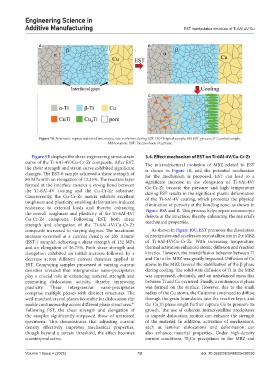
                  Figure 10. Schematic representation of microstructure evolution during EST. (A) Original sample; (B) EST process; (C) cooled sample.
                                               Abbreviation: EST: Electroshock treatment.


              Figure 9E displays the shear engineering stress-strain   3.4. Effect mechanism of EST on Ti-6Al-4V/Cu-Cr-Zr
            curve of the Ti-6Al-4V/Cu-Cr-Zr composite. After EST,   The  microstructural  evolution  of  MBZ  related  to  EST
            the shear strength and strain curve exhibited significant   is shown in  Figure  10, and the potential mechanism
            changes. The EST-0 sample achieved a shear strength of   for the mechanism is proposed. EST can lead to a
            80 MPa with an elongation of 12.35%. The reaction layer   significant increase in the elongation of Ti-6Al-4V/
            formed at the interface ensures a strong bond between   Cu-Cr-Zr because the pressure and high temperature
            the Ti-6Al-4V coating and the Cu-Cr-Zr substrate.   during EST results in the significant plastic deformation
            Concurrently, the Cu-Cr-Zr matrix exhibits excellent   of the Ti-6Al-4V coating, which promotes the physical
            toughness and plasticity, enabling deformation-induced   elimination of porosity at the bonding zone, as shown in
            resistance to external loads and thereby enhancing   Figure 10A and B. This process helps repair microscopic
            the overall toughness and plasticity of the Ti-6Al-4V/  defects at the interface, thereby enhancing the material’s
            Cu-Cr-Zr composite. Following EST, both shear      mechanical properties.
            strength and elongation of the Ti-6Al-4V/Cu-Cr-Zr
            composite increased to varying degrees. The maximum   As shown in Figure 10C, EST promotes the dissolution
            increase occurred at a current density of 205  A/mm    of precipitates and accelerates recrystallization in the MBZ
                                                          2
            (EST-1 sample), achieving a shear strength of 132 MPa   of Ti-6Al-4V/Cu-Cr-Zr. With increasing temperature,
            and an elongation of 36.75%. Both shear strength and   thermal activation enhanced atomic diffusion and reaction
            elongation exhibited an initial increase followed by a   kinetics. However, the interdiffusion behavior between Ti
            decrease across  different  current  densities  applied  in   and Cu in the MBZ was greatly impacted. Diffusion of Cu
            EST. Comparing samples processed at varying current   atoms in the MBZ favored the stabilization of the β phase
            densities revealed that intergranular nano-precipitates   during cooling. The solid-state diffusion of Ti in the MBZ
            play a crucial role in enhancing material strength and   was suppressed, obviously, and an unbalanced mass flux
            promoting  dislocation activity, thereby improving   between Ti and Cu occurred. Finally, a continuous α phase
            plasticity.  These  intergranular  nano-precipitates  was formed on the  surface. However, due to the  small
            comprise multiple phases with distinct structures. The   radius of the Cu atoms, the Cu atoms continued to diffuse
            well-matched crystal planes favorable for dislocation slip   through the grain boundaries into the reactive layer, and
            enable continuous slip across different phase structures.    the Cu Ti phase might further capture Cu to promote its
                                                         41
                                                                    4
            Following  EST,  the  shear  strength  and  elongation  of   growth. The use of coherent intracrystalline precipitates
            the samples significantly surpassed those of untreated   to impede dislocation motion can enhance the strength
            specimens. This demonstrates that adjusting current   of the material. In addition, activation of mechanisms,
            density effectively improves mechanical properties,   such  as laminar dislocations  and deformation  can
            though beyond a certain threshold, the effect becomes   also  enhance  material  properties.  Under  high-density
            counterproductive.                                 current conditions, Ti Cu precipitates in the MBZ and
                                                                                 2

            Volume 1 Issue 4 (2025)                         12                         doi: 10.36922/ESAM025430030

