


Page 187 - GHES-2-1
P. 187
Global Health Econ Sustain                                               Income-related inequality in health


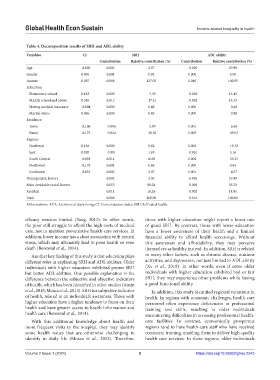
            Table 4. Decomposition results of SRH and ADL ability
            Variables               CI                   SRH                             ADL ability
                                           Contribution  Relative contribution (%)  Contribution  Relative contribution (%)
            Age                    −0.002     0.002             2.57             −0.005           29.99
            Gender                  0.005     0.001             0.92             0.000             0.00
            Income                  0.087     0.086            127.05            0.016            100.95
            Education
             Elementary school      0.163     0.005             −7.39            −0.002           13.43
             Middle school and above  0.385   0.012            −17.11            −0.002           15.33
             Having medical insurance  −0.004  0.000            0.48             0.000            −0.60
             Marital status         0.006     0.000             0.45             0.000            −0.88
            Residence
             Town                  −0.106     −0.004            −5.99            0.001            −6.68
             Rural                 −0.172     −0.024           −36.01            0.005            −29.03
            Regions
             Northeast              0.136     0.000             0.64             0.002            −13.32
             East                   0.020     −0.001            1.85             −0.001            5.16
             South Central         −0.091     0.011             16.05            0.004            −25.23
             Northwest             −0.178     0.001             0.86             0.000             0.64
             Southwest             −0.053     0.002             3.07             0.001            −4.57
            Demographic factors               0.002             3.50             −0.005           29.99
            Main avoidable social factors     0.055             80.24            −0.009           55.20
            Residual                          0.011             16.26            −0.002           14.81
            Total                             0.068            100.00            −0.016           100.00
            Abbreviations: ADL: Activities of daily living; CI: Concentration index; SRH: Self-rated health.


            efficacy remains limited (Yang, 2013). In other words,   those with higher education might report a lower rate
            the poor still struggle to afford the high costs of medical   of good SRH. By contrast, those with lower education
            care, not to mention preventative health-care services. In   have a lower awareness of  their health and a  limited
            addition, lower income has a close association with mental   financial ability to afford health screenings. Without
            stress, which may ultimately lead to poor health or even   this awareness and affordability, they may perceive
            death (Benzeval et al., 2014).                     themselves as healthy instead. In addition, SRH is related
              Another key finding of this study is that education plays   to many other factors, such as chronic disease, outdoor
            different roles in explaining SRH and ADL abilities. Older   activities, and depression, not just limited to ADL ability
            individuals with higher education exhibited poorer SRH   (Xu  et al., 2019). In  other  words, even  if  some older
            but better ADL abilities. One possible explanation is the   individuals with higher education exhibited bad or fair
            difference between the subjective and objective indicators   SRH, they may experience other problems while having
            of health, which has been identified in other studies (Amin   a good functional ability.
            et al., 2015; Mosca et al., 2013). SRH is a subjective indicator   In addition, this study identified regional variations in
            of health, related to an individual’s awareness. Those with   health. In regions with economic challenges, health-care
            higher education have a higher tendency to focus on their   personnel  often  experience  deficiencies  in  professional
            health and have greater access to health information and   training and skills, resulting in older individuals
            health care (Benzeval et al., 2014).               encountering difficulties in accessing professional health-
              With  this  additional  knowledge  about  health  and   care facilities. In contrast, economically prosperous
            more frequent visits to the hospital, they may identify   regions tend to have health-care staff who have received
            some health issues that are otherwise challenging to   consistent training, enabling them to deliver high-quality
            identify in daily life (Mosca  et al., 2013). Therefore,   health-care services. In these regions, older individuals


            Volume 2 Issue 1 (2024)                         8                        https://doi.org/10.36922/ghes.2243

