


Page 48 - GTM-1-1
P. 48
Global Translational Medicine                                 Bioinformatics analysis of dilated cardiomyopathy


                                                               4. Discussion

                                                               The proteins encoded by the genes of DCM have a wide
                                                               range of biological functions; therefore, there are a
                                                               diverse array of mechanisms underlying the pathogenesis
                                                               of DCM, including mutations in cytoskeletal proteins,
                                                               mitochondrial  proteins,  and  bridging  proteins .  DCM
                                                                                                     [20]
                                                               with an inherited trait is called familial DCM and accounts
                                                                                                           [21]
                                                               for approximately 20 – 50% of patients with DCM .
                                                               Autosomal dominant inheritance usually occurs in the
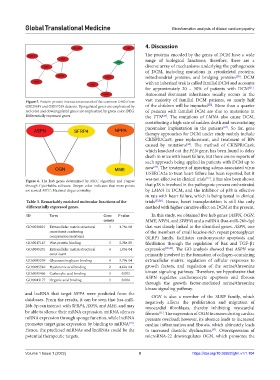
            Figure 5. Protein-protein interaction network of the common DEGs from   vast  majority  of familial  DCM  patients,  so nearly half
                                                                                         [22]
            GSE29819 and GSE57338 datasets. Upregulated genes are emphasized by   of the children will be impacted . More than a quarter
            red color and downregulated genes are emphasized by green color. DEG:   of patients with familial DCM are due to mutations in
            Differentially expressed genes.                    the  TTN . The mutations of  LMNA also cause DCM,
                                                                      [23]
                                                               contributing a high rate of sudden death and necessitating
                                                               pacemaker implantation in the patients . So far, gene
                                                                                                [24]
                                                               therapy approaches for DCM under study mainly include
                                                               CRISPR/Cas9, gene replacement, and treatment of BPs
                                                                                [25]
                                                               caused by mutations . The method of CRISPR/Cas9,
                                                               which knocked out the PLN gene, has been found to delay
                                                               death in mice with heart failure, but there are no reports of
                                                               such approach being applied in patients with DCM up to
                                                                  [26]
                                                               now . The treatment of injecting adeno-associated virus
                                                               1/SERCA2a to treat heart failure has been reported, but it
                                                                                         [27]
            Figure  6.  The  hub genes determined  by  MCC algorithm  and Degree   was not effective in clinical trials . It has also been shown
            through CytoHubba software. Deeper color indicates that more points   that p38 is involved in the pathogenic process orchestrated
            are scored. MCC: Maximal clique centrality.        by LMNA in DCM, and the inhibitor of p38 is effective
                                                               in rats with heart failure, which is being tested in clinical
            Table 3. Remarkably enriched molecular functions of the   trials [25,28] . Hence, heart transplantation is still the only
            differentially expressed genes.                    method with higher curative effect on DCM at the present.

            ID        Term                   Gene   P value      In this study, we obtained five hub genes (ASPN, OGN,
                                             counts            MME, NPPA, and SFRP4) and a miRNA (hsa-miR-26b-5p)
            GO:0030021  Extracellular matrix structural   3  4.78e-06  that was closely linked to the identified genes. ASPN, one
                      constituent conferring                   of the members of small leucine-rich repeat proteoglycan
                      compression resistance                   (SLRP) family, facilitates cardiomyocyte apoptosis and
            GO:0017147  Wnt-protein binding    3    2.38e-05   fibrillation through the regulation of Bax and TGF-β1
            GO:0005201  Extracellular matrix structural   4  1.03e-04  expression [29,30] . The GO analysis showed that ASPN was
                      constituent                              primarily involved in the formation of collagen-containing
            GO:0005539  Glycosaminoglycan binding  4  3.79e-04  extracellular matrix, regulation of cellular responses to
            GO:0005540  Hyaluronic acid binding  2  4.62e-04   growth factors, and regulation of the serine/threonine
            GO:0031406  Carboxylic acid binding  3   0.003     kinase signaling pathway. Therefore, we hypothesize that
            GO:0043177  Organic acid binding   3     0.004     ASPN regulates cardiomyocyte apoptosis and fibrosis
                                                               through the growth factor-mediated serine/threonine
                                                               kinase signaling pathway.
            and lncRNA that target  NPPA were predicted from the
                                                                 OGN is also a member of the SLRP family, which
            databases. From the results, it can be seen that hsa-miR-  negatively  affects  the  proliferation and  migration of
            26b-5p can interact with SFRP4, ASPN, and MEE, and may   myocardial fibroblasts, thereby inhibiting myocardial
            be able to silence their mRNA expression. miRNA silences   fibrosis . The expression of OGN increases during cardiac
                                                                     [31]
            mRNA expression through sponge function, while lncRNA   pressure overload; however, its absence leads to increased
            promotes target gene expression by binding to miRNA .   cardiac inflammation and fibrosis, which ultimately leads
                                                        [13]
            Hence, the predicted miRNAs and lncRNAs could be the   to increased diastolic dysfunction . Overexpression of
                                                                                           [32]
            potential therapeutic targets.                     microRNA-22 downregulates OGN, which promotes the


            Volume 1 Issue 1 (2022)                         8                      https://doi.org/10.36922/gtm.v1i1.104

