


Page 53 - GTM-1-2
P. 53
Global Translational Medicine                                      A Taxonomy of AI Assisted Medical Robots


                         A                                       B


                         C                        D                         E


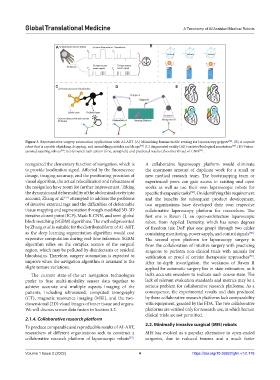
            Figure 3. Representative surgery automation applications with AI-ART. (A) Mimicking human tactile sensing for laparoscopy gripper . (B) A capsule
                                                                                                  [50]
            robot that is capable of picking, dropping, and assembling particles and drugs . (C) Augmented reality (AR)-assisted biological annotation . (D) Vision-
                                                             [52]
                                                                                                    [53]
            assisted suturing robots . (E) Ground truth atrium (first, at top left) and predicted results (the other three) of CNN .
                           [54]
                                                                                      [55]
            recognized the elementary function of navigation, which is   A  collaborative laparoscopy platform would eliminate
            to provide localization signal. Affected by the fluorescence   the enormous amount of duplicate work for a small or
            dosage, imaging accuracy, and the positioning precision of   new medical research team. The bootstrapping team or
            visual algorithm, the actual relocalization and robustness of   experienced peers can gain access to existing and open
            the navigation have room for further improvement. Taking   works as well as use their own laparoscopic robots for
            the dynamics and deformability of the abdominal cavity into   specific therapeutic tasks . On identifying this requirement
                                                                                  [58]
            account, Zhang et al.  attempted to address the problems   and  the  benefits for subsequent product  development,
                            [57]
            of invasive external tags and the difficulties of deformable   two organizations have developed their own respective
            tissue mapping and segmentation through modified 3D-3D   collaborative laparoscopy platform for researchers. The
            iterative closest point (ICP), Mask R-CNN, and semi-global   first one is Raven II, an open-architecture laparoscopic
            block matching (SGBM) algorithms. The method presented   robot, from Applied Dexterity, which has seven degrees
            by Zhang et al. is suitable for the distributed form of AI-ART,   of freedom (six DoF plus one grasp) through two cables
            as the deep learning segmentation algorithm would cost   containing monitoring, power supply, and control signals .
                                                                                                           [58]
            expensive computation during real-time inference. SGBM   The  second  open  platform  for  laparoscopy  surgery  is
            algorithm relies on the complex texture of the surgical   from the collaboration of intuitive surgery with practicing
            region, which may be polluted by disinfectants or residual   surgeons to perform non-clinical trials with animals for
            bloodstains. Therefore, surgery automation is expected to   verification  or  proof  of  certain  therapeutic  approaches .
                                                                                                           [59]
            improve when the navigation algorithm is invariant to the   After in-depth investigation, the weakness of Raven II
            slight texture variations.                         applied for automatic surgery lies in state estimation, as it
              The current state-of-the-art navigation technologies   lacks accurate encoders to indicate each coarse state. The
            prefer to fuse multi-modality sensor data together to   lack of relevant evaluation standards and metrics may be a
            achieve accurate and multiple aspects imaging of the   serious problem for collaborative research platforms. As a
            patients, including  ultrasound,  computed  tomography   consequence, the experimental results and data produced
            (CT), magnetic resonance imaging (MRI), and the two-  by these collaborative research platforms lack comparability
            dimensional (2D) visual images of inner tissue and organs.   with equipment, granted by the FDA. The two collaborative
            We will discuss sensor data fusion in Section 3.2.  platforms are verified only for research use, in which human
                                                               clinical trials are not permitted.
            2.1.4. Collaborative research platform
                                                               2.2. Minimally invasive surgical (MIS) robots
            To produce comparable and reproducible results of AI-ART,
            researchers  of  different  organizations  seek  to  construct  a   MIS has evolved as a popular alternative to open-ended
            collaborative research platform of laparoscopic robots .   surgeries, due to reduced trauma and a much faster
                                                        [57]

            Volume 1 Issue 2 (2022)                         4                      https://doi.org/10.36922/gtm.v1i2.176

