


Page 56 - GTM-1-2
P. 56
Global Translational Medicine                                      A Taxonomy of AI Assisted Medical Robots


                         A                            B


                                                       C
                         D


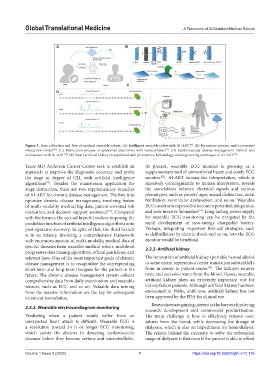
            Figure 5. Data collection and flow of medical wearable robots. (A) Intelligent wearable robot with AI-ART . (B) Formation process, and a proposed
                                                                                 [71]
                        [72]
                                                                       [71]
            interaction  model .  (C)  Fabrication  process  of  epidermal  electronics  with  nanocomplex .  (D)  Cardiovascular  disease  management  method  and
                            [73]
                                                                                                    [70]
            architecture with AI-ART . (E) Smart artificial kidney incorporated with proteomics, hematology, and engineering techniques of AI-ART .
            Texas MD Anderson Cancer Center seek to establish an   At present, wearable ECG monitor is growing as a
            approach to improve the diagnostic accuracy and probe   supplementary tool of conventional heavy and costly ECG
            the  stage or degree of  CLL  with artificial  intelligence   monitor . AI-ART human-like interpretation, which is
                                                                     [71]
            algorithms . Besides the mainstream application for   massively unrecognizable to human interpreters, reveals
                    [73]
            stage distinction, there are two supplementary branches   the associations between electrical signals and various
            of AI-ART for chronic disease management. The first is to   phenotypes, such as patents’ ages, sexual distinction, atrial
            optimize chronic disease management, involving fusion   fibrillation, ventricular dysfunction, and so on. Wearable
            of multi-modality medical big data, patient-oriented risk   ECG monitor is expected to become a potential, ubiquitous,
                                                                                     [74]
            evaluation, and decision support assistance . Compared   and non-invasive biomarker . Long-lasting power supply
                                               [71]
            with the former, the second branch involves imposing the   for wearable ECG monitoring can be mitigated by the
            prediction function of artificial intelligence algorithms onto   rapid development of new-energy chargeable battery.
            post-operative recovery. In spite of that, the third branch   Perhaps, integrating important first-aid strategies, such
            is  in  its  infancy,  involving  a  comprehensive  framework   as defibrillation by electric shock and so on, into the ECG
            with enormous amount of multi-modality medical data of   monitor would be beneficial.
            specific diseases from wearable medical robots, multilevel   2.3.3. Artificial kidney
            progressive data mining algorithms, official guidelines, and
            relevant laws. One of the most important goals of chronic   The innovation of artificial kidney (portable hemodialysis)
            disease management is to recapitulate the corresponding   to some extent represents a center translation substantially
                                                                                         [75]
            short-term and long-term therapies for the patient in the   from in-center to patient-center . The kidneys remove
            future. The chronic disease management system collects   toxic and excessive water from the blood. Hence, wearable
            comprehensive data from daily examination and wearable   artificial kidney plays an extremely important role for
            sensors, such as ECG and so on. Valuable data mining   kidney failure patients. Although artificial kidney has been
            from the massive information are the key for subsequent   envisioned in 1960s, until now, artificial kidney has not
            treatment formulation.                             been approved by the FDA for clinical use.
                                                                 Researchers are gaining interest in the barriers hindering
            2.3.2. Wearable electrocardiogram monitoring
                                                               research development and commercial productization.
            Predicting when a patient would suffer from an     The main challenge is how to effectively remove toxic
            unexpected heart attack is difficult. Wearable ECG is   salutes  from  the  blood,  while  decreasing  the  dosage of
            a revolution toward 24  h or longer ECG monitoring,   dialysate, which is also an impediment for hemodialysis.
            which assists the doctors in detecting cardiovascular   The reason behind the necessity to solve the substantial
            diseases before they become serious and uncontrollable.   usage of dialysate is that even if the patient is able to afford


            Volume 1 Issue 2 (2022)                         7                      https://doi.org/10.36922/gtm.v1i2.176

