


Page 60 - GTM-1-2
P. 60
Global Translational Medicine                                      A Taxonomy of AI Assisted Medical Robots


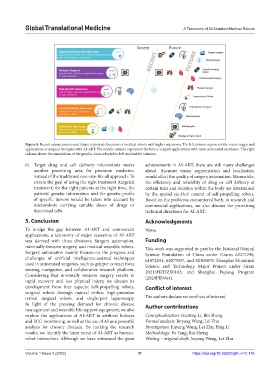
            Figure 8. Recent advancements and future technical directions of medical robots with higher autonomy. The left column represents the recent stages and
            applications of surgical therapies with AI-ART. The middle column represents the future surgical applications with more automated assistance. The right
            column shows the annotations of the graphic icons adopted in left and middle columns.

            6)  Target drug and cell delivery microrobots weave   achievements in AI-ART, there are still many challenges
               another promising area for precision medicine,   ahead. Accurate vision segmentation and localization
               instead of the traditional one-size-fits-all approach. To   would affect the quality of surgery automation. Meanwhile,
               ensure the goal of using the right treatment (targeted   the efficiency and reliability of drug or cell delivery at
               treatment) for the right patients at the right time, the   certain time and location within the body are determined
               patients’ genetic information and the genetic profile   by  the  spatial  six-DoF  control  of  self-propelling  robots.
               of  specific  tumors would  be  taken  into  account  by   Based on the problems encountered both, in research and
               microrobots carrying suitable doses of drugs or   commercial applications, we also discuss the promising
               functional cells.                               technical directions for AI-ART.

            5. Conclusion                                      Acknowledgments
            To bridge the gap between AI-ART and commercial    None.
            applications, a taxonomy of major scenarios of AI-ART
            was derived with three divisions: Surgery automation,   Funding
            minimally invasive surgery, and medical wearable robots.   This work was supported in part by the National Natural
            Surgery automation mainly focuses on the progress and   Science Foundation of China under Grants 62272298,
            challenges of artificial intelligence-assisted techniques   61872241, 62077037, and 82100879; Shanghai Municipal
            used in automated surgeries, such as gripper contact force   Science and Technology Major Project under Grant
            sensing, navigation, and collaborative research platform.   2021SHZDZX0102; and Shanghai Pujiang Program
            Considering that minimally invasive surgery results in   (2020PJD044).
            rapid  recovery  and  less  physical  injury,  we  discuss  its
            development from four aspects: Self-propelling robots,   Conflict of interest
            surgical robots through natural orifice, high-precision
            retinal surgical robots, and single-port laparoscopy.   The authors declare no conflicts of interest.
            In light of the pressing demand for chronic disease   Author contributions
            management and wearable life support equipment, we also
            explore the applications of AI-ART in artificial kidneys   Conceptualization: Huating Li, Bin Sheng
            and ECG monitoring, as well as the use of AI as a powerful   Formal analysis: Jinyang Wang, Lei Zhu
            analysis  for  chronic  diseases.  By  ranking  the  research   Investigation: Jinyang Wang, Lei Zhu, Ping Li
            results, we identify the latest trend of AI-ART as human-  Methodology: Po Yang, Bin Sheng
            robot interaction. Although we have witnessed the great   Writing – original draft: Jinyang Wang, Lei Zhu


            Volume 1 Issue 2 (2022)                         11                     https://doi.org/10.36922/gtm.v1i2.176

