


Page 52 - GTM-1-2
P. 52
Global Translational Medicine                                      A Taxonomy of AI Assisted Medical Robots


                                                                 These standard procedures could be learned through
                                                               AI-ART . Wang  et al.  developed a medical robot
                                                                     [56]
                                                                                   [56]
                                                               system equipped with stereo vision, incision detection,
                                                               and staple positioning algorithms for surgical suturing and
                                                               staples removals. Lu et al.  presented an in-house vision
                                                                                    [54]
                                                               system with efficient trajectory planning algorithms. They
                                                               successfully  addressed  the  automatic  suturing  problem
                                                               with two collaborative grippers through visual detection
                                                               algorithms, which also eliminated the risk of collisions
                                                               between the two gripers. In fact, their work does not
                                                               include the full automation of medical robots, but rather
                                                               only as a sub-state semi-automatic assistant for surgeons.
                                                               Moreover, the tactile sensation between the operated tissue
                                                               or organ and the robotic gripper does not provide any
                                                               feedback to the surgeons or have a monitoring module of
                                                               the computer unit.
                                                                 Even with artificial intelligence assistance for
                                                               laparoscopic surgery, full-automation medical robots have
                                                               not been approved by the Food and Drug Administration
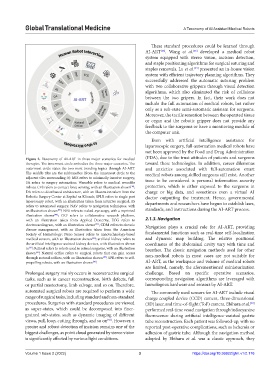
            Figure  2. Taxonomy of AI-ART in three major scenarios  for medical   (FDA), due to the trust attitudes of patients and surgeons
            therapies. The innermost circle embodies the three major scenarios. The   toward these technologies. In addition, career dilemmas
            outermost circle states the two most trending topics through AI-ART.   and anxieties associated with full-automation smart
            The middle tiles are the subbranches (from the innermost circle to the   medical robots among skilled surgeons still exist. Another
            adjacent tiles surrounding it): MIS refers to minimally invasive surgery;
            SA refers to surgery automation; Wearable refers to medical wearable   issue to be considered is personal information security
            robots; CFS refers to contact force sensing, with an illustration shown ;   protection, which is either exposed to the surgeons in
                                                         [38]
            DA refers to distributed architecture, with an illustration taken from the   charge or big data, and sometimes even  a virtual AI
            Robotic Surgery Center at Szpital na Klinach; SPLR refers to single port   doctor outputting the treatment. Hence, governmental
            laparoscopy robot, with an illustration taken from intuitive surgical; AS   departments and researchers have begun to establish laws,
            refers to automated surgery; NAV refers to navigation techniques, with
            an illustration shown ; NES refers to naked-eye scopy, with a reprinted   standards, and instructions during the AI-ART process.
                          [39]
            illustration shown ; CRP refers to collaborative research platform,
                        [40]
            with an illustration taken from Applied Dexterity; ECG refers to   2.1.3. Navigation
            electrocardiogram, with an illustration shown ; CDM refers to chronic   Navigation plays a crucial role for AI-ART, providing
                                         [41]
            disease management, with an illustration taken from the American
            Society of Hematology; Nano Sensor refers to nanotechnology-based   fundamental functions such as real-time self-localization
            medical sensors, with an illustration shown ; artificial kidney refers to   and dynamic map building. The relative positional
                                        [42]
            the artificial intelligence-assisted kidney devices, with illustration shown   coordinates of the abdominal cavity vary with time and
            in ; Retinal refers to robots used in retinal surgeries, with an illustration   breathes. The classic navigation methods used for other
             [43]
            shown ; Natural orifice refers to surgical robots that can gain access
                [44]
            through natural orifices, with an illustration shown ; SPR refers to self-  non-medical robots in most cases are not suitable for
                                             [45]
            propelling robots, with an illustration shown .    AI-ART, as the workspace and volume of medical robots
                                         [46]
                                                               are limited, namely, the aforementioned miniaturization
            Prolonged surgery mainly occurs in reconstructive surgical   challenge. Based on specific operative scenarios,
            tasks, such as in cancer reconstruction, birth defects, full   corresponding navigation algorithms are leveraged with
            or partial mastectomy, limb salvage, and so on. Therefore,   homologous hardware and sensors by AI-ART.
            automated surgical robots are required to perform a wide   The commonly used sensors for AI-ART include visual
            range of surgical tasks, including standard and non-standard   charge coupled device (CCD) camera, three-dimensional
            procedures. Surgeries with standard procedures are viewed   (3D) laser, and time-of-flight (ToF) camera. Ebihara et al.
                                                                                                           [39]
            as super-states, which could be decomposed into finer-  performed real-time vessel navigation through indocyanine
            grained  sub-states,  such  as  dynamic  imaging  of  different   fluorescence during artificial intelligence-assisted gastric
            views, pull, loop, cutting through, and so on . However, a   tube reconstruction. Each patient was followed-up, with no
                                               [56]
            precise and robust detection of incision remains one of the   reported post-operative complications, such as ischemia or
            biggest challenges, as point cloud generated by stereo vision   adhesion of gastric tube. Although the navigation method
            is significantly affected by various light conditions.  adopted by Ebihara  et al. was a classic approach, they


            Volume 1 Issue 2 (2022)                         3                      https://doi.org/10.36922/gtm.v1i2.176

