


Page 67 - GTM-1-2
P. 67
Global Translational Medicineranslational Medicine
            Global T                                                           Risk factors of idiopathic pulmonary fibrosis
                                                                               Risk factors of idiopathic pulmonary fibrosis


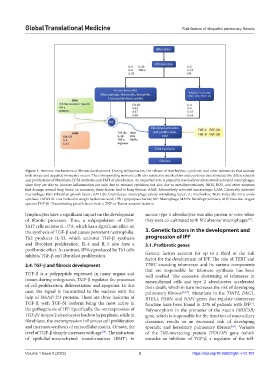
            Figure 1. Immune mechanisms of fibrosis development. During inflammation, the release of interleukins, cytokines and other substances that activate
            both innate and acquired immunity occurs. The corresponding immune cells also synthesize interleukins and cytokines that stimulate the differentiation
            and proliferation of fibroblasts, ECM synthesis, and EMT of alveolocytes. An important role is played by classically or alternatively activated macrophages,
            since they are able to increase inflammation not only due to released cytokines, but also due to metalloproteinases, iNOS, ROS, and other enzymes
            that damage normal lung tissue. In summary, these factors lead to lung fibrosis. AAM: Alternatively activated macrophage; CAM: Classically activated
            macrophage; FGF: Fibroblast growth factor; GM-CSF: Granulocyte-macrophage colony-stimulating factor; IL: Interleukin; iNOS: Inducible nitric oxide
            synthase; LMWHA: Low molecular weight hyaluronic acid; LPS: Lipopolysaccharide; MF: Macrophage; MMPs: Metalloproteinases; ROS: Reactive oxygen
            species; TGF-β1: Transforming growth factor beta 1; TNF-α: Tumor necrosis factor α.

            lymphocytes have a significant impact on the development   mouse type 1 alveolocytes was also proven in vitro when
                                                                                                          [11]
                                                          +
            of fibrotic  processes.  Thus, a subpopulation of CD4    they were co-cultivated with M2 alveolar macrophages .
            Th17 cells secretes IL-17A, which has a significant effect on
            the synthesis of TGF-β and causes persistent neutrophilia.   3. Genetic factors in the development and
            Th2 produces IL-13, which activates TGF-β synthesis   progression of IPF
            and fibroblast proliferation. IL-4 and IL-5 also have a   3.1. Profibrotic genes
            profibrotic effect. In contrast, IFN-γ produced by Th1 cells
            inhibits TGF-β and fibroblast proliferation.       Genetic factors account for up to a third of the risk
                                                               factor for the development of IPF. The role of TERT and
            2.4. TGF-β and fibrosis development                TERC encoding telomerase and its various components
                                                               that are responsible for telomere synthesis has been
            TGF-β is a polypeptide expressed in many organs and   well studied. The excessive shortening of telomeres in
            tissues during ontogenesis. TGF-β regulates the processes   mesenchymal cells and type  2 alveolocytes accelerated
            of cell proliferation, differentiation and apoptosis. In this   their death, which in turn increases the risk of developing
            case, the signal is transmitted to the nucleus with the   pulmonary fibrosis [1,5-7] . Mutations in the  TINF2, DKC1,
            help of SMAD 2/3 proteins. There are three isoforms of   RTEL1, PARN, and NAF1 genes that regulate telomerase
            TGF-β, with TGF-β1 isoform being the most active in   function have been found in 25% of patients with IPF .
                                                                                                           [7]
            the pathogenesis of IPF. Specifically, the overexpression of   Polymorphism in the promoter of the mucin  (MUC5B)
            TGF-β1 in type 2 alveolocytes leads to hyperplasia, while in   gene, which is responsible for the function of mucociliary
            fibroblasts, the overexpression influences cell proliferation   clearance, results in an increased risk of developing
            and increases synthesis of extracellular matrix. Of note, the   sporadic and hereditary pulmonary fibrosis [5,6] . Variants
            level of TGF-β sharply increases with age . The induction   of the Toll-interacting protein  (TOLLIP) gene (which
                                            [10]
            of epithelial-mesenchymal transformation (EMT) in   encodes an inhibitor of  TGF-β, a regulator of the toll-

            Volume 1 Issue 2 (2022)                         3                      https://doi.org/10.36922/gtm.v1i2.107

