


Page 58 - IJAMD-1-2
P. 58
International Journal of AI for
            Materials and Design
                                                                             AI-assisted ML monitoring in additive auxetics


             A                                             B


             C                                              D


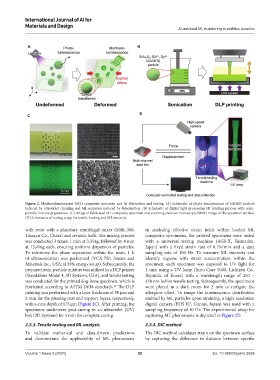
            Figure 2. Mechanoluminescent (ML) composite specimen and its fabrication and testing. (A) Schematic of photo-luminescence of SAOED particle
            induced by ultraviolet charging and ML emission induced by deformation. (B) Schematic of digital light processing-3D printing process with resin-
            particle mixture preparation. (C) Image of fabricated ML composite specimen and scanning electron microscopy (SEM) image of the specimen surface.
            (D) Schematics of testing setup for tensile loading and ML intensity.

            with resin with a planetary centrifugal mixer (MSK-300,   in analyzing effective strain fields within loaded ML
            Tmaxcn Co., China) and ceramic balls. The mixing process   composite specimens, the printed specimens were tested
            was conducted 3 times: 1 min at 3,354g, followed by 4 min   with a universal testing machine (AGS-X, Shimadzu,
            at 13,416g each, ensuring uniform dispersion of particles.   Japan)  with  a  fixed  strain  rate of  0.1%/min  and  a  data
            To minimize the phase separation within the resin, 1  h   sampling rate of 100  Hz. To measure ML intensity and
            of ultrasonication was performed (VCX-750, Sonics and   identify regions with strain concentration within the
            Materials Inc., USA; at 38% energy setup). Subsequently, the   specimen, each specimen was exposed to UV light for
            prepared resin-particle mixture was utilized in a DLP printer   1 min using a UV lamp (Inno-Cure 5000, Lichtzen Co.,
            (Standalone Model 4, 3D Systems, USA), and tensile testing   Republic of Korea) with a wavelength range of 250 –
            was conducted for the printed dog-bone specimen, which is   450 nm before tensile testing. Subsequently, the specimens
            fabricated according to ASTM D638 standards.  The DLP   were placed in a dark room for 2  min to mitigate the
                                                 43
            printing was performed with a layer thickness of 50 µm and   afterglow  effect. To  image the  luminescence distribution
            3 mm for the printing part and support layers, respectively,   emitted by ML particles upon straining, a high-resolution
            with a cure depth of 175 μm (Figure 2C). After printing, the   digital camera (EOS R7, Canon, Japan) was used with a
            specimens underwent post-curing in an ultraviolet (UV)   sampling frequency of 10 Hz. The experimental setup for
            box (3D Systems) for 5 min for complete curing.    capturing ML phenomena is depicted in Figure 2D.

            2.3.3. Tensile testing and ML analysis             2.3.4. DIC method
            To  validate  numerical  and  data-driven  predictions   The DIC method calculates strain on the specimen surface
            and demonstrate the applicability of ML phenomena   by capturing the difference in distance between specific


            Volume 1 Issue 2 (2024)                         52                             doi: 10.36922/ijamd.3539

