


Page 62 - IJAMD-1-2
P. 62
International Journal of AI for
            Materials and Design
                                                                             AI-assisted ML monitoring in additive auxetics


            Table 1. Design parameters of the auxetic structure  strain obtained via ML intensity analysis. For the experimental
                                                               analysis of auxetic structures, the three configurations and
            Design  Unit cell           Design variable        design parameters presented in  Table 1  were 3D-printed
                                   ϕ      τ      x     y       and subjected to tensile testing. Considering that the printed
            1                     0.066  0.211  0.154  0.102   specimens demonstrated a linear regime within 0.1% of strain
                                                               (in global stress-strain behavior (Figure S3), the analysis was
                                                               conducted at the same strain level.
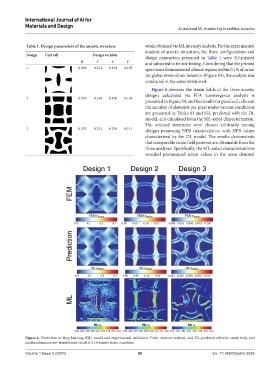
                                                                 Figure 6 presents the strain fields of the three auxetic
                                                               designs calculated via FEA (convergence analysis is
            2                     0.070  0.169  0.120  0.169
                                                               presented in Figure S4, and the results for pixelized cells and
                                                               the number of elements per pixel under various conditions
                                                               are presented in Tables S1 and S2), predicted with the DL
                                                               model, and calculated from the ML-aided characterization.
                                                               The selected structures were  chosen arbitrarily among
            3                     0.132  0.215  0.294  0.141   designs possessing NPR characteristics, with NPR values
                                                               characterized by the DL model. The results demonstrate
                                                               that comparable strain field patterns are obtainable from the
                                                               three analyses. Specifically, the ML-aided characterizations
                                                               revealed  pronounced  strain  values  in  the  areas  denoted


            Figure 6. Prediction of deep learning (DL) model and experimental validation. Finite element method- and DL-predicted effective strain field, and
            mechanoluminescent-transformed result at 0.1% tensile strain condition

            Volume 1 Issue 2 (2024)                         56                             doi: 10.36922/ijamd.3539

