


Page 35 - IJAMD-1-3
P. 35
International Journal of AI for
            Materials and Design
                                                                 Prediction of wall geometry for wire arc additive manufacturing


                                                               A                      B


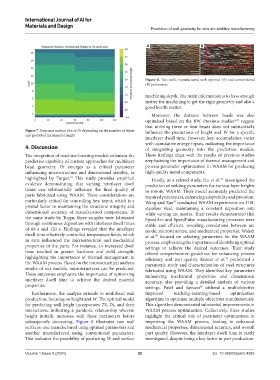
                                                               Figure 8. Two walls manufactured with optimal (A) and conventional
                                                               (B) parameters

                                                               machining depth. The main information is to have enough
                                                               matter for machining to get the right geometry and also a
                                                               good health matter.
                                                                 Moreover, the distance between beads was also
                                                               optimized based on the BW. Previous studies  suggest
                                                                                                     1,35
                                                               that utilizing three or four beads does not substantially
            Figure 7. Response surface plot of Dt depending on the number of layers   influence the predictions of height and  W for a specific
            and predicted incremental height
                                                               interlayer dwell time. However, heat accumulation varies
                                                               with cumulative energy inputs, indicating the importance
            4. Discussion                                      of integrating geometry into the prediction models.
            The integration of machine-learning models enhances the   These findings align with the results of previous studies
            predictive capability of current approaches for multilayer   emphasizing the importance of thermal management and
            bead geometry.  Dt emerges as a critical parameter   process parameter optimization in WAAM for producing
            influencing microstructure and dimensional stability, as   high-quality metal components.
            highlighted by Turgut.  This study provides empirical   Finally, in a related study, Hu et al.  investigated the
                               34
                                                                                               36
            evidence demonstrating that varying interlayer dwell   prediction of welding parameters for various layer heights
            times can substantially influence the final quality of   in robotic WAAM. Their model accurately predicted the
            parts fabricated using WAAM. These considerations are   required parameters, enhancing adaptability and precision.
            particularly critical for controlling heat input, which is a   Wang and Xue  conducted WAAM experiments on 316L
                                                                           37
            pivotal factor in maintaining the structural integrity and   stainless steel, maintaining a constant deposition rate
            dimensional accuracy of manufactured components. In   while varying arc modes. Their results demonstrated that
            the same study by Turgu, three samples were fabricated   SpeedArc and SpeedPulse manufacturing processes were
            through continuous deposition with interlayer dwell times   stable and efficient, revealing correlations between arc
            of 60 s and 120 s. Findings revealed that the interlayer   mode, microstructure, and mechanical properties. Wahsh
            dwell time effectively controlled temperature fields, which   et al.  focused on selecting parameters for the WAAM
                                                                   38
            in turn influenced the microstructural and mechanical   process, emphasizing the importance of identifying optimal
            properties of the parts. For instance, an increased dwell   settings to achieve the desired outcomes. Their study
            time  resulted  in  greater  hardness  and  yield  strength,   offered  comprehensive  guidelines  for  enhancing  process
            highlighting the importance of thermal management in   efficiency and part quality. Kumar  et al.  performed a
                                                                                                 17
            the WAAM process. Based on the microstructural analysis   parametric study and characterization of steel structures
            results of our models, microstructures can be predicted.   fabricated using WAAM. They identified key parameters
            These outcomes emphasize the importance of optimizing   influencing mechanical properties and dimensional
            interlayer dwell time to achieve the desired material   accuracy, also providing a detailed analysis of various
            properties.                                        settings. Patel and Savsani  utilized a multiobjective
                                                                                      39
              Furthermore, the analysis extends to multibead wall   improved  teaching–learning-based  optimization
            production, focusing on height and W. The optimal model   algorithm to optimize multiple objectives simultaneously.
            for predicting wall height incorporates TS, Dt, and their   This algorithm demonstrated substantial improvements in
            interactions, indicating a parabolic relationship wherein   WAAM  process  optimization.  Collectively,  these  studies
            height initially increases with these parameters before   highlight the critical role of parameter optimization in
            subsequently decreasing.  Figure  8 illustrates two wall   improving the WAAM process, leading to enhanced
            surfaces: one manufactured using optimal parameters and   mechanical properties, dimensional accuracy, and overall
            another manufactured using conventional parameters.   part quality. However, the interlayer dwell time is rarely
            This indicates the possibility of predicting W and surface   investigated, despite being a key factor in part production.


            Volume 1 Issue 3 (2024)                         29                             doi: 10.36922/ijamd.4285

