


Page 63 - IJAMD-2-1
P. 63
International Journal of AI for
            Materials and Design
                                                                             Fatigue life prediction via contrastive learning


                          A                   B               C                      D


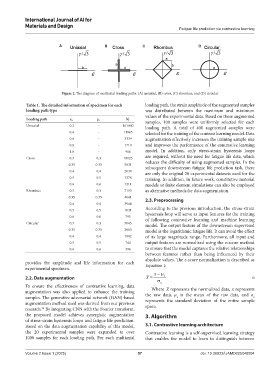
                           Figure 2. The diagram of multiaxial loading paths: (A) uniaxial, (B) cross, (C) rhombus, and (D) circular

            Table 1. The detailed information of specimen for each   loading path, the strain amplitude of the augmented samples
            loading path type                                  was distributed between the maximum and minimum
                                                               values of the experimental data. Based on these augmented
            Loading path       εa         γa           Nf      samples, 100  samples were uniformly selected for each
            Uniaxial           0.2         -         161000    loading path. A  total of 400 augmented samples were
                               0.4         -          11865    selected for the training of the contrast learning model. Data
                               0.6         -          3339     augmentation effectively increases the training sample size
                               0.8         -          1719     and improves the performance of the contrastive learning
                               1.0         -          906      model. In addition,  only  stress-strain  hysteresis loops
            Cross              0.3        0.3         10023    are required, without the need for fatigue life data, which
                              0.35        0.35        5831     reduces the difficulty of using augmented samples. In the
                                                               subsequent downstream fatigue life prediction task, there
                               0.4        0.4         2038     are only the original 20 experimental datasets used for the
                               0.5        0.5         1378     training. In addition, in future work, constitutive material
                               0.6        0.6         1311     models or finite element simulations can also be employed
            Rhombus            0.3        0.3         7193     as alternative methods for data augmentation.
                              0.35        0.35        4041     2.3. Preprocessing
                               0.4        0.4         3944
                               0.5        0.5         1031     According to the previous introduction, the stress-strain
                               0.6        0.6         795      hysteresis loop will serve as input features for the training
                                                               of following contrastive learning and machine learning
            Circular           0.3        0.3         5045     model. The output feature of the downstream supervised
                              0.35        0.35        2963     model is the logarithmic fatigue life. It can avoid the effect
                               0.4        0.4         1802     of its large magnitude range. Furthermore, all input and
                               0.5        0.5         744      output features are normalized using the z-score method
                               0.6        0.6         396      to ensure that the model captures the relative relationships
                                                               between features rather than being influenced by their
                                                               absolute values. The z-score normalization is described as
            provides the amplitude and life information for each   Equation I:
            experimental specimen.
                                                                   x   x
            2.2. Data augmentation                             x                                           (I)
                                                                     x
            To ensure the effectiveness of contrastive learning, data
            augmentation was also applied to enhance the training   Where  x represents the normalized data, x represents
            samples. The generative adversarial network (GAN)-based   the raw data,  μ   is the mean of the raw data, and  σ
                                                                            x
                                                                                                             x
                                                               represents the standard deviation of the entire sample
            augmentation method used was derived from our previous   space.
            research.  By integrating CNN with the Fourier transform,
                   16
            the proposed model achieves synergistic augmentation   3. Algorithm
            of stress-strain hysteresis loops and fatigue life prediction.
            Based on the data augmentation capability of this model,   3.1. Contrastive learning architecture
            the 20 experimental samples were expanded to over   Contrastive learning is a self-supervised learning strategy
            1000  samples for each loading path. For each multiaxial   that enables the model to learn to distinguish between


            Volume 2 Issue 1 (2025)                         57                        doi: 10.36922/IJAMD025040004

