


Page 68 - IJAMD-2-1
P. 68
International Journal of AI for
            Materials and Design
                                                                             Fatigue life prediction via contrastive learning


                          A                                  B


                          C                                  D


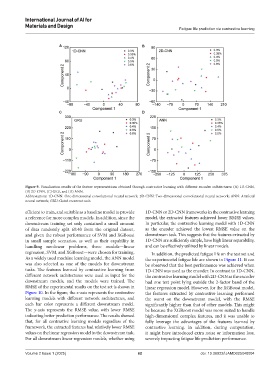
            Figure 9. Visualization results of the feature representations obtained through contrastive learning with different encoder architectures: (A) 1D-CNN,
            (B) 2D-CNN, (C) GRU, and (D) ANN.
            Abbreviations: 1D-CNN: One-dimensional convolutional neural network; 2D-CNN: Two-dimensional convolutional neural network; ANN: Artificial
            neural network; GRU: Gated recurrent unit.

            efficient to train, and suitable as a baseline model to provide   1D-CNN or 2D-CNN frameworks in the contrastive learning
            a reference for more complex models. In addition, since the   model, the extracted features achieved lower RMSE values.
            downstream training set only contained a small amount   In particular, the contrastive learning model with 1D-CNN
            of data randomly split 60:40 from the original dataset,   as the encoder achieved the lowest RMSE value  on the
            and given the robust performance of SVM and XGBoost   downstream task. This suggests that the features extracted by
            in small sample scenarios, as well as their capability in   1D-CNN are sufficiently simple, have high linear separability,
            handling  nonlinear  problems, three models—linear   and can be effectively utilized by linear models.
            regression, SVM, and XGBoost—were chosen for training.   In addition, the predicted fatigue life on the test set and
            As a widely used machine learning model, the ANN model   the experimental fatigue life are shown in Figure 11. It can
            was also selected as one of the models for downstream   be observed that the best performance was achieved when
            tasks. The features learned by contrastive learning from   1D-CNN was used as the encoder. In contrast to 1D-CNN,
            different network architectures were used as input for the   the contrastive learning model with 2D-CNN as the encoder
            downstream models, and the models were trained. The   had one test point lying outside the 2-factor band of the
            RMSE of the experimental results on the test set is shown in   linear regression model. However, for the XGBoost model,
            Figure 10. In the figure, the x-axis represents the contrastive   the features extracted by contrastive learning performed
            learning models with different network architectures, and   the worst on the downstream model, with the RMSE
            each bar color represents a different downstream model.   significantly higher than that of other models. This might
            The  y-axis  represents  the RMSE value,  with  lower RMSE   be because the XGBoost model was more suited to handle
            indicating better prediction performance. The results showed   high-dimensional complex features, and it was unable to
            that, for all contrastive learning models regardless of the   fully leverage the advantages of the features learned by
            framework, the extracted features had relatively lower RMSE   contrastive learning. In addition, during computation,
            values on the linear regression model in the downstream task.   it might have introduced extra noise or information loss,
            For all downstream linear regression models, whether using   severely impacting fatigue life prediction performance.


            Volume 2 Issue 1 (2025)                         62                        doi: 10.36922/IJAMD025040004

