


Page 73 - IJAMD-2-1
P. 73
International Journal of AI for
            Materials and Design
                                                                             Fatigue life prediction via contrastive learning


                          A                                    B


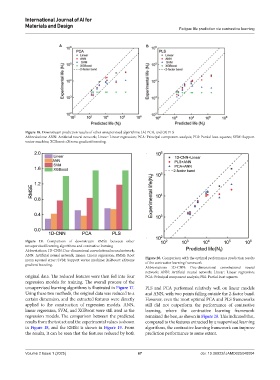
            Figure 18. Downstream prediction results of other unsupervised algorithms: (A) PCA, and (B) PLS
            Abbreviations: ANN: Artificial neural network; Linear: Linear regression; PCA: Principal component analysis; PLS: Partial least squares; SVM: Support
            vector machine; XGBoost: eXtreme gradient boosting.


            Figure  19.  Comparison of downstream RMSE between other
            unsupervised learning algorithms and contrastive learning
            Abbreviations: 1D-CNN: One-dimensional convolutional neural network;
            ANN: Artificial neural network; Linear: Linear regression; RMSE: Root
            mean squared error; SVM: Support vector machine; XGBoost: eXtreme   Figure 20. Comparison with the optimal performance prediction results
            gradient boosting.                                 of the contrastive learning framework
                                                               Abbreviations: 1D-CNN:  One-dimensional  convolutional neural
                                                               network; ANN: Artificial neural network; Linear: Linear regression;
            original data. The reduced features were then fed into four   PCA: Principal component analysis; PLS: Partial least squares.
            regression models for training. The overall process of the
            unsupervised learning algorithms is illustrated in Figure 17.   PLS and PCA performed relatively well on linear models
            Using these two methods, the original data was reduced to a   and ANN, with two points falling outside the 2-factor band.
            certain dimension, and the extracted features were directly   However, even the most optimal PCA and PLS frameworks
            applied to the construction of regression models. ANN,   still did not outperform the performance of contrastive
            linear regression, SVM, and XGBoost were still used as the   learning, where the contrastive learning framework
            regression models. The comparison between the predicted   remained the best, as shown in Figure 20. This indicated that,
            results from the test set and the experimental values is shown   compared to the features extracted by unsupervised learning
            in Figure 18, and the RMSE is shown in Figure 19. From   algorithms, the contrastive learning framework can improve
            the results, it can be seen that the features reduced by both   prediction performance to some extent.


            Volume 2 Issue 1 (2025)                         67                        doi: 10.36922/IJAMD025040004

