


Page 71 - IJAMD-2-1
P. 71
International Journal of AI for
            Materials and Design
                                                                             Fatigue life prediction via contrastive learning


                          A                                       B


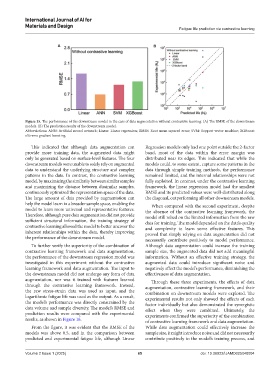
            Figure 15. The performance of the downstream model in the case of data augmentation without contrastive learning. (A) The RMSE of the downstream
            models. (B) The prediction results of the downstream model.
            Abbreviations: ANN: Artificial neural network; Linear: Linear regression; RMSE: Root mean squared error; SVM: Support vector machine; XGBoost:
            eXtreme gradient boosting.

              This indicated that although data augmentation can   Regression models only had one point outside the 2-factor
            provide more training data, the augmented data might   band, most of the data within the error margin was
            only be generated based on surface-level features. The four   distributed near its edges. This indicated that while the
            downstream models were unable to solely rely on augmented   models could, to some extent, capture some patterns in the
            data to understand the underlying structure and complex   data through simple training methods, the performance
            patterns in the data. In contrast, the contrastive learning   remained limited, and the internal relationships were not
            model, by maximizing the similarity between similar samples   fully exploited. In contrast, under the contrastive learning
            and maximizing the distance between dissimilar samples,   framework, the linear regression model had the smallest
            continuously optimized the representation space of the data.   RMSE and its predicted values were well-distributed along
            The large amount of data provided by augmentation can   the diagonal, outperforming all other downstream models.
            help the model learn in a broader sample space, enabling the   When compared with the second experiment, despite
            model to learn more universal and representative features.   the absence of the contrastive learning framework, the
            Therefore, although pure data augmentation did not provide   model still relied on the limited information from the raw
            sufficient structural information, the training strategy of   data for training. The model depended on the data’s quality
            contrastive learning allowed the model to better uncover the   and complexity to learn some effective features. This
            inherent relationships within the data, thereby improving   proved that simply relying on data augmentation did not
            the performance of the downstream model.           necessarily contribute positively to model performance.
              To further verify the superiority of the combination of   Although data augmentation could increase the training
            contrastive learning framework and data augmentation,   sample size, the augmented data did not add meaningful
            the performance of the downstream regression model was   information. Without an effective training strategy, the
            investigated in this experiment without the contrastive   augmented data could introduce significant noise and
            learning framework and data augmentation. The input to   negatively affect the model’s performance, diminishing the
            the downstream model did not undergo any form of data   effectiveness of data augmentation.
            augmentation, nor was it trained with features learned   Through these three experiments, the effects of data
            through the contrastive learning framework. Instead,   augmentation, contrastive learning framework, and their
            the raw stress-strain data was used as input, and the   combination on downstream models were explored. The
            logarithmic fatigue life was used as the output. As a result,   experimental results not only showed the effects of each
            the model’s performance was directly constrained by the   factor individually but also demonstrated the synergistic
            data volume and sample diversity. The model’s RMSE and   effect when they were combined. Ultimately, the
            prediction results  were compared with the  experimental   experiments confirmed the superiority of the combination
            results, as shown in Figure 16.                    of contrastive learning framework and data augmentation.
              From the figure, it was evident that the RMSE of the   While data augmentation could effectively increase the
            models was above 0.5, and in the comparison between   sample size, it might introduce noise and did not necessarily
            predicted and experimental fatigue life, although Linear   contribute positively to the model’s training process, and


            Volume 2 Issue 1 (2025)                         65                        doi: 10.36922/IJAMD025040004

