


Page 65 - IJAMD-2-1
P. 65
International Journal of AI for
            Materials and Design
                                                                             Fatigue life prediction via contrastive learning


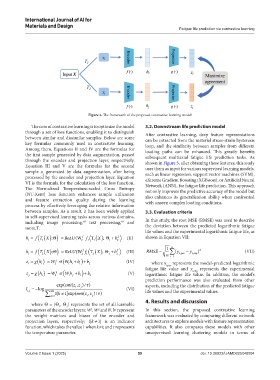
                                       Figure 4. The framework of the proposed contrastive learning model

              The core of contrastive learning is to optimize the model   3.2. Downstream life prediction model
            through a set of loss functions, enabling it to distinguish   After contrastive learning, deep feature representations
            between similar and dissimilar samples. Below are some   can be extracted from the material stress-strain hysteresis
            key formulas commonly used in contrastive learning.   loop,  and  the  similarity  between  samples  from  different
            Among them, Equations II and IV are the formulas for   loading paths can be enhanced. This greatly benefits
            the first sample generated by data augmentation, passed   subsequent multiaxial fatigue life prediction tasks. As
            through the encoder and projection layer, respectively.   shown in Figure 5, after obtaining these features, this study
            Equation  III and  V are the  formulas for  the  second   uses them as input for various supervised learning models,
            sample  x   generated  by  data  augmentation,  after  being   such as linear regression, support vector machines (SVM),
                   j
            processed by the encoder and projection layer. Equation   eXtreme Gradient Boosting (XGBoost), or Artificial Neural
            VI is the formula for the calculation of the loss function.   Network (ANN), for fatigue life prediction. This approach
            The Normalized Temperature-scaled Cross Entropy    not only improves the predictive accuracy of the model but
            (NT-Xent) loss function enhances sample utilization   also enhances its generalization ability when confronted
            and feature extraction quality during the learning   with unseen complex loading conditions.
            process by effectively leveraging the relative information
            between samples. As a result, it has been widely applied   3.3. Evaluation criteria
            in self-supervised learning tasks across various domains,
            including  image  processing,   text  processing,   and   In this study, the root MSE (RMSE) was used to describe
                                    66
                                                     67
            more.T.                                            the deviation between the predicted logarithmic fatigue
                                                               life values and the experimental logarithmic fatigue life, as
                                                   f
                f TX   ;  ReLU( W f  f  T  X   ;    b    (II)  shown in Equation VII:
             i
            h   1                 2  1  1    1   2
                                                                        1  n
                                                   f
                f TX   ;  ReLU( W f  f  T  X   ;    b    (III)  RMSE     y (    y  ) 2     (VII)
             i
            h   2                 2  1  2    1   2                         ipre,  iexp,
                                                                        n i1
                                  b
                         g
            z      W    Wh    b 2             (IV)      where y i,pre  represents the model-predicted logarithmic
                g h
                        2
                              1
                                   1
                                i
             i
                   i

                g h
                                  b
                         g
            z      W    Wh    b 2              (V)     fatigue life value and  y i,exp  represents the experimental
                                                               logarithmic fatigue life value. In addition, the model’s
                              1
                        2
                                j
                   i
                                   1
             j
                                                               prediction performance  was also  evaluated from  other
                               (,
                         exp( smiz z )/ )                     aspects, including the distribution of the predicted fatigue
            l  log             i  j                  (VI)
             ij,
                      2 k1 1 k [ 1 ]exp( smi zz )/ )       life values and the experimental values.
                       N
                                    (,
                                        j
                                      i
                                                               4. Results and discussion
              where Θ = {Θ , Θ } represents the set of all learnable
                          1
                             2
            parameters of the encoder layers; W, W  and b, b  represent   In this section, the proposed contrastive learning
                                        f
                                           g
                                                f
                                                  g
            the weight matrices and biases of the encoder and   framework was evaluated by comparing different network
                                           1]
            projection layers, respectively;  1[k ≠  is an indicator   architectures to explore models with feature representation
            function, which takes the value 1 when k≠i; and τ represents   capabilities. It also compares these models with other
            the temperature parameter.                         unsupervised learning clustering models in terms of
            Volume 2 Issue 1 (2025)                         59                        doi: 10.36922/IJAMD025040004

