


Page 154 - IJB-10-1
P. 154
International Journal of Bioprinting                                3D-printed micro-perfused culture device


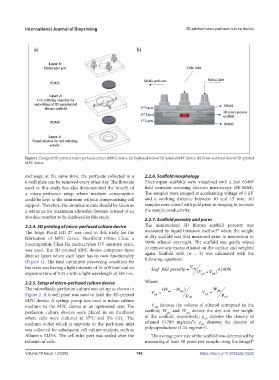
            Figure 1. Design of 3D-printed micro-perfused culture (MPC) device. (a) Exploded view of 3D-printed MPC device. (b) Cross-sectional view of 3D- printed
            MPC device.

            exchange; at the same time, the perfusate collected  in a   2.2.6. Scaffold morphology
            6-well plate can be removed every other day. The flowrate   Electrospun scaffolds were visualized with a Jeol 6340F
            used in this study has also demonstrated the benefit of   field  emission  scanning  electron  microscopy  (FE-SEM).
            a micro-perfusion setup where medium consumption   The samples were imaged at accelerating voltage of 5 kV
            could be kept to the minimum without compromising cell   and a working distance between 10 and 15 mm. All
            support. Therefore, the simulation data should be taken as   samples were coated with gold prior to imaging to increase
            a reference for maximum allowable flowrate instead of an   the sample conductivity.
            absolute number to be deployed in this study.
                                                               2.2.7. Scaffold porosity and pores
            2.2.4. 3D printing of micro-perfused culture device  The miniaturized 3D fibrous scaffold porosity was
                                                                                             47
            The  Asiga  Pico2  HD  27  was  used  in  this  study  for  the   measured by liquid intrusion method  where the weight
            fabrication  of  MPC  device.  NextDent  Ortho  Clear,  a   of dry scaffold was first measured prior to immersion in
            biocompatible Class IIa methacrylate UV sensitive resin,   100% ethanol overnight. The scaffold was gently wiped
            was used. The 3D-printed MPC device comprises three   to remove any excess ethanol on the surface and weighed
            distinct layers where each layer has its own functionality   again.  Scaffold  with  (n  =  3)  was  calculated  with  the
            (Figure 1). The final optimized processing condition for   following equations:
            the resin was having a light intensity of 16 mW/cm  and an   Scaf fold porosity =  V eth  ×100 %
                                                    2
            exposure time of 0.45 s with a light wavelength of 385 nm.               ( V + V )
                                                                                       pcl
                                                                                           eth
            2.2.5. Setup of micro-perfused culture device      Where:
            The microfluidic perfusion culture was set-up as shown in   ( W wet  − W )      W dry
                                                                              dry
            Figure 2. A 6-well plate was used to hold the 3D-printed   V =      ρ eth           V =  ρ pcl
                                                                                        pcl
                                                                   eth
            MPC device. A syringe pump was used to infuse culture
            medium  to  the  MPC  device  at  an  optimized  rate.  The   V  denotes the volume of ethanol entrapped in the
                                                                   eth
            perfusion culture devices  were placed in an incubator   scaffold;  W  and  W  denote the dry and wet weight
                                                                        dry
                                                                                wet
            where cells were cultured at 37°C and 5% CO . The   of  the scaffold,  respectively;  ρ  denotes the  density  of
                                                                                        eth
                                                     2
                                                                                   3
            medium outlet which is opposite to the perfusion inlet   ethanol (0.789 mg/mm );  ρ  denotes the density of
                                                                                       pcl
                                                                                        3
            was collected for subsequent cell culture analysis, such as   polycaprolactone (1.14 mg/mm ).
            Albumin ELISA. The cell inlet port was sealed after the   The average pore size of the scaffold was determined by
            infusion of cells.                                 measuring at least 50 pores per sample using the ImageJ®
            Volume 10 Issue 1 (2024)                       146                        https://doi.org/10.36922/ijb.0226

