


Page 155 - IJB-10-1
P. 155
International Journal of Bioprinting                                3D-printed micro-perfused culture device


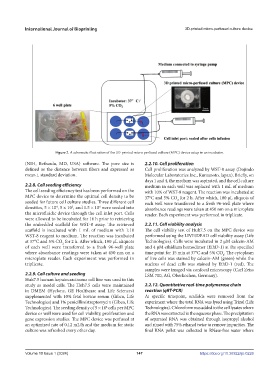
                         Figure 2. A schematic illustration of the 3D-printed micro-perfused culture (MPC) device setup in an incubator.

            (NIH, Bethesda, MD, USA) software. The pore size is   2.2.10. Cell proliferation
            defined as the distance between fibers and expressed as   Cell proliferation was analyzed by WST-8 assay (Dojindo
            mean ± standard deviation.                         Molecular Laboratories Inc., Kumanoto, Japan). Briefly, on
                                                               days 1 and 4, the medium was aspirated, and the cell culture
            2.2.8. Cell seeding efficiency                     medium in each well was replaced with 1 mL of medium
            The cell seeding efficiency test has been performed on the   with 10% of WST-8 reagent. The reaction was incubated at
            MPC device to determine the optimal cell density to be   37°C and 5% CO  for 2 h. After which, 100 µL aliquots of
                                                                             2
            seeded for future cell culture studies. Three different cell   each well were transferred to a fresh 96-well plate where
            densities, 5 × 10 , 5 × 10 , and 1.5 × 10  were seeded into   absorbance readings were taken at 450 nm on a microplate
                         4
                                           6
                                5
            the microfluidic device through the cell inlet port. Cells   reader. Each experiment was performed in triplicate.
            were allowed to be incubated for 16 h prior to retrieving
            the embedded scaffold for WST-8 assay. The retrieved   2.2.11. Cell viability analysis
            scaffold is incubated with 1 mL of medium with 1:10   The cell viability test of Huh7.5 on the MPC device was
            WST-8 reagent to medium. The reaction was incubated   performed using the LIVE/DEAD cell viability assay (Life
            at 37°C and 5% CO  for 2 h. After which, 100 µL aliquots   Technologies). Cells were incubated in 2 µM calcein-AM
                            2
            of each well were transferred to a fresh 96-well plate   and 4 µM ethidium homodimer (EthD-1) at the specified
            where absorbance readings were taken at 450 nm on a   time point for 15 min at 37°C and 5% CO . The cytoplasm
                                                                                                2
            microplate reader. Each experiment was performed in   of live cells was stained by calcein-AM (green) while the
            triplicate.                                        nucleus  of  dead  cells  was  stained  by  EthD-1  (red).  The
                                                               samples were imaged via confocal microscopy (Carl Zeiss
            2.2.9. Cell culture and seeding                    LSM 700, AG, Oberkochen, Germany).
            Huh7.5 human hepatocarcinoma cell line was used in this
            study as model cells. The Huh7.5 cells were maintained   2.2.12. Quantitative real-time polymerase chain
            in DMEM (Hyclone, GE Healthcare and Life Sciences)   reaction (qRT-PCR)
            supplemented with 10% fetal bovine serum (Gibco, Life   At specific timepoint, scaffolds were removed from the
            Technologies) and 1% penicillin/streptomycin (Gibco, Life   experiment where the total RNA was lysed using Trizol (Life
            Technologies). The seeding density of 5 × 10  cells per MPC   Technologies). Chloroform was added to the cell lysates where
                                              4
            device or well were used for cell viability, proliferation and   the RNA was extracted in the aqueous phase. The precipitation
            gene expression studies. The MPC device was perfused at   of separated RNA was obtained through isopropyl alcohol
            an optimized rate of 0.12 mL/h and the medium for static   and rinsed with 75% ethanol twice to remove impurities. The
            culture was refreshed every other day.             final RNA pellet was collected in RNase-free water where


            Volume 10 Issue 1 (2024)                       147                        https://doi.org/10.36922/ijb.0226

